English























































































SpaceX and Elon Musk Advance AI Orbital Data Centers

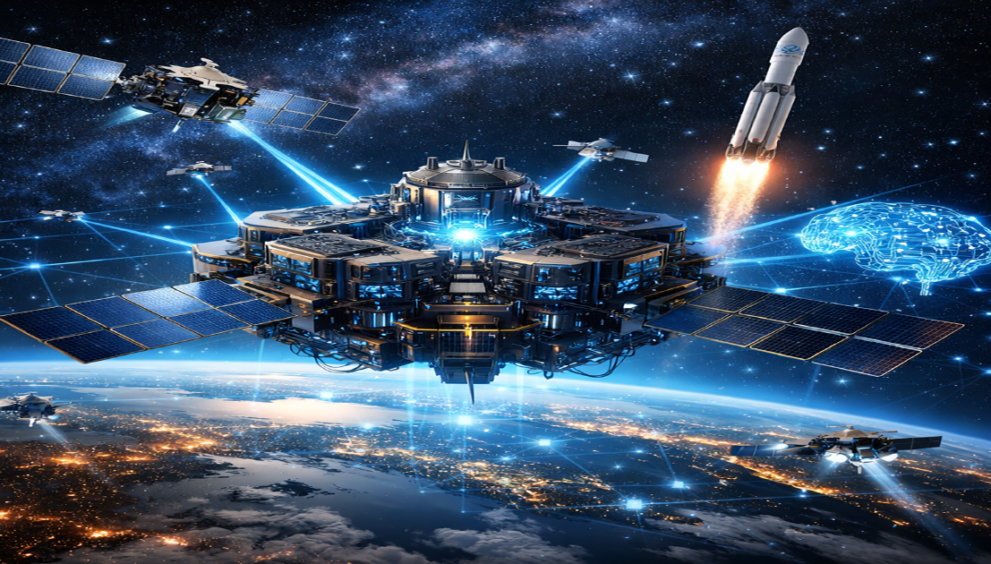
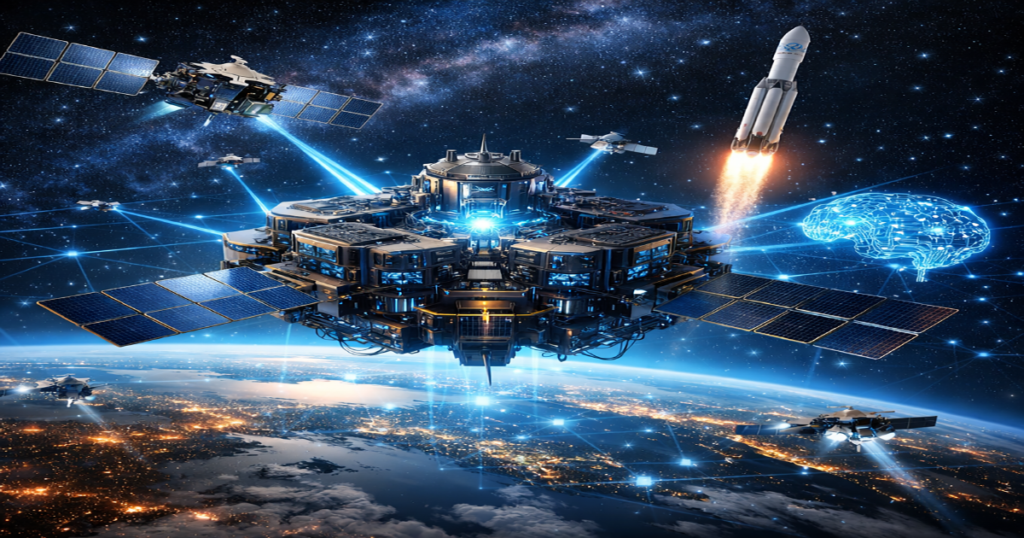
SpaceX, under the direction of Elon Musk, is accelerating development of orbital data centers, signaling a major shift in how AI and big data infrastructure could operate beyond Earth. The emergence of SpaceX space-based data center technology, advanced SpaceX satellite data storage systems, and the company’s expanding role in space cloud computing are redefining digital infrastructure. These orbital data centers for AI and big data promise ultra-low-latency processing, resilient data environments, and new computational models that could alter global technology ecosystems.
SpaceX, Elon Musk, and the Next Infrastructure Frontier
The technology sector is entering a new infrastructure cycle in which terrestrial data centers are no longer the only viable backbone of global computing. SpaceX, led by Elon Musk, is positioning orbital platforms as the next layer of distributed computing architecture. While historically recognized for launch systems and satellite constellations, SpaceX is increasingly associated with high-capacity space infrastructure capable of supporting AI-scale computation.
The concept of orbital data centers is grounded in the convergence of satellite networking, high-efficiency solar power generation, thermal management advantages of space, and the exponential demand for AI processing. With AI models consuming vast computational resources, Earth-based facilities face challenges including energy constraints, cooling limitations, land usage, and geopolitical risks. Orbital infrastructure introduces an alternative paradigm in which compute and storage assets operate in microgravity environments with continuous solar exposure.
SpaceX Space-Based Data Center Technology
SpaceX space-based data center technology represents an evolution of satellite platforms from communication nodes into full-scale computational environments. These orbital systems are envisioned as modular server clusters housed in radiation-hardened structures, powered by large-scale solar arrays and linked through high-bandwidth laser inter-satellite communication.
Unlike traditional ground facilities, orbital centers benefit from natural thermal radiation into space, reducing the cooling burden that dominates terrestrial data center energy consumption. This engineering advantage is critical for AI workloads, which require dense GPU and accelerator deployments that generate significant heat. SpaceX’s expertise in spacecraft manufacturing and rapid deployment cycles provides a foundation for scalable, repeatable orbital compute infrastructure.
SpaceX Satellite Data Storage Systems
SpaceX satellite data storage systems form the backbone of orbital cloud computing. These systems are designed to handle massive datasets generated by satellites, sensors, and Earth-based users. Rather than downlinking all raw data to ground stations, orbital facilities could process, filter, and store information in space before selective transmission.
This shift addresses bandwidth bottlenecks and enhances data resilience. Storing critical datasets in orbit diversifies risk across physical domains, offering protection from terrestrial disasters, power grid failures, and regional conflicts. From a commercial perspective, orbital storage introduces a premium tier of highly secure, distributed data hosting suited for sensitive AI models and high-value analytics.
SpaceX Role in Space Cloud Computing
The SpaceX role in space cloud computing extends beyond hardware deployment. The company’s launch cadence, satellite production capabilities, and experience in autonomous operations create a vertically integrated pathway for space-based infrastructure. Cloud computing in orbit merges aerospace engineering with data center design, producing a new category of “space cloud” services.
Space cloud computing could serve governments, research institutions, and enterprises seeking advanced computational environments. AI-driven simulations for weather prediction, planetary science, defense analytics, and global monitoring stand to benefit from on-orbit processing capacity. By integrating orbital nodes into broader networks, SpaceX could help establish a distributed computing layer above the Earth’s surface.
Orbital Data Centers for AI and Big Data
Orbital data centers for AI and big data address the core issue driving the sector: exponential growth in computational demand. AI models are scaling rapidly in parameter count and training complexity, requiring energy-intensive clusters. Space offers a theoretically abundant energy source through uninterrupted solar exposure, which could support high-density compute operations without increasing terrestrial carbon footprints.
Big data analytics also benefit from proximity to space-based sensors. Earth observation satellites generate continuous streams of environmental, agricultural, and urban data. Processing these datasets in orbit reduces latency and allows immediate AI-driven insights, supporting faster decision-making in disaster response, climate tracking, and resource management.
Commercial and Strategic Implications
The commercial implications are significant. Enterprises reliant on AI-driven analytics, financial modeling, and real-time global data flows could access a new tier of infrastructure optimized for high-performance workloads. Orbital hosting may become a premium service category, similar to how hyperscale cloud services evolved.
Strategically, orbital data centers represent digital infrastructure with geopolitical dimensions. Nations investing in space-based compute capacity gain resilience and autonomy in data processing. As space becomes a domain for information infrastructure, regulatory frameworks, spectrum management, and orbital logistics will play central roles in shaping adoption. SpaceX’s entry into this domain underscores the maturation of the commercial space sector. What began as launch services is evolving into integrated space infrastructure spanning connectivity, transportation, and computing.
Conclusion
The convergence of SpaceX, Elon Musk, and orbital data centers signals a structural evolution in global computing. Through advancements in SpaceX space-based data center technology, robust SpaceX satellite data storage systems, and an expanding SpaceX role in space cloud computing, the foundation is forming for a new class of infrastructure. Orbital data centers for AI and big data represent both a technological leap and a commercial frontier, positioning space as a central domain in the next era of digital transformation.