

 English




























































































AI Credit Markets Risk & Opportunity Insights 2026

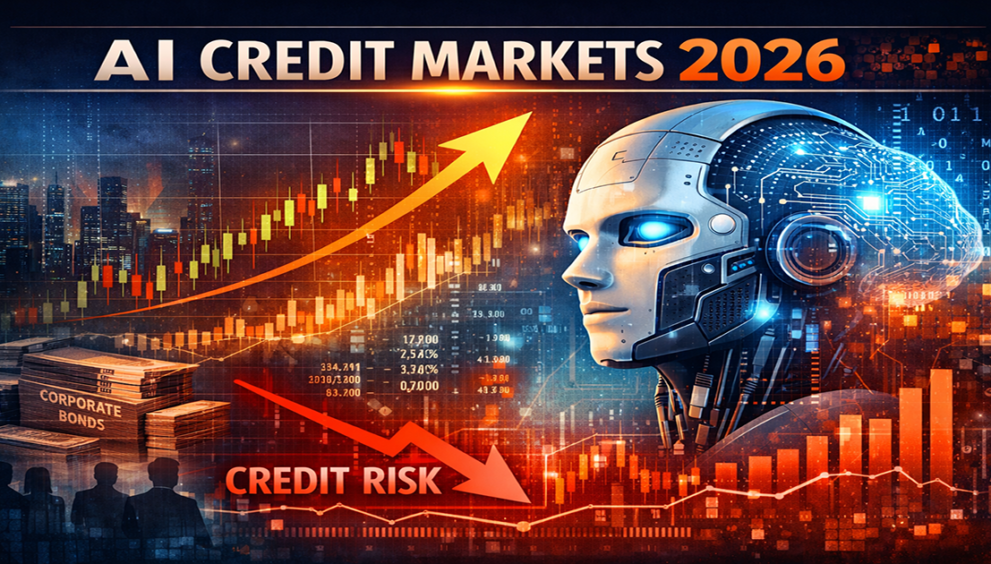
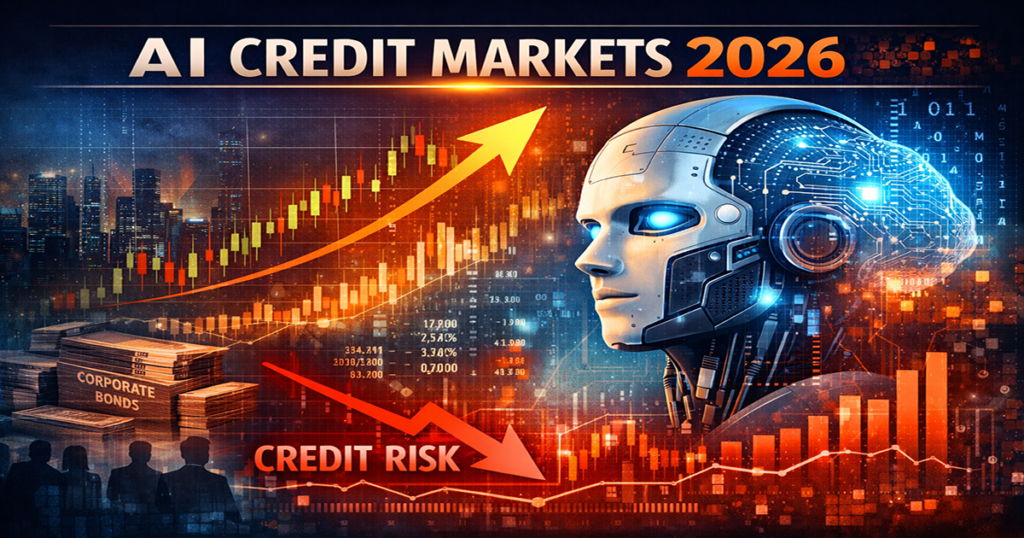
AI Credit Markets are emerging as a critical focal point for investors and risk strategists in 2026 as artificial intelligence investment surges and exposes new vulnerabilities in corporate lending and debt instruments. Recent analysis highlights how AI disruption credit risk could catalyze a wave of defaults in leveraged loans and reshape corporate bond market dynamics, forcing reassessment of credit market risk 2026 amid elevated AI infrastructure debt exposures. Detailed evaluations of how AI spending is reshaping corporate credit markets reveal mounting pressure on software‐heavy credit portfolios and private credit sectors.
AI Credit Markets: A Commercial Investigation
In the evolving landscape of global finance, AI Credit Markets have become a central area of investigation, blending technological innovation with systemic credit risk. Investment banks, rating agencies, and alternative credit providers are actively modeling potential impacts of artificial intelligence adoption on credit portfolios, debt issuance trends, and corporate solvency. These analyses underscore the intensifying intersection between AI-driven business transformation and the mechanics of credit risk, especially within sectors deeply exposed to software disruption.
AI Disruption and Lending Dynamics
Extensive spending on AI infrastructure is reshaping corporate credit markets as a new generation of debt issuances supports data centers, machine learning platforms, and hyperscale computing deployments. Major technology firms continue to dominate bond markets with large issuances aimed at financing AI growth trajectories, even as covenant-light terms raise questions about secondary market protections and risk buffering. The trend toward significant AI debt issuance reflects broader strategic shifts, where capital markets compete to underwrite tomorrow’s AI economy while grappling with liquidity and risk pricing for long-duration AI projects.
At the same time, lenders with heavy exposure to software or tech-service industries now face increasing credit risk due to rapid shifts in revenue models and competitive pressures from AI solutions, leading some analysts to warn of potentially widespread loan stress. These stress factors include short maturity schedules on riskier debts and concentrated exposures in private credit markets, where transparency and risk assessment frameworks lag behind those in traditional syndicated loan markets.
Credit Market Risk 2026: A Shifting Paradigm
The concept of credit market risk 2026 encompasses not just traditional financial stress indicators, but also the systemic impacts of AI disruption across industries. Firms with large debt loads tied to legacy software revenue streams may find credit conditions tightening, especially as investors and banks reprice risk premia in response to AI-accelerated competitive pressure. UBS and other major credit strategists have signaled that a significant share of private credit could be exposed to AI disruption, with forecasts estimating notable proportions of credit portfolios at risk of downgrades or default should revenue shortfalls materialize.
Moreover, industry observers note that even large, investment-grade borrowers are not immune to the secondary effects of AI disruption, as shifts in market sentiment can influence yield spreads and liquidity dynamics. In this environment, credit investors and risk officers must evaluate not only borrower fundamentals but also the potential for AI technologies to degrade or enhance long-term cash flows, altering default probabilities and loss given default assumptions.
Private Credit & Corporate Bond Market AI Exposure
Private credit markets, which have grown substantially in recent years, now face scrutiny for concentrated exposure to sectors vulnerable to AI disruption. Alternative lenders and private credit funds have increased allocation to technology and software service companies, often with less transparency and weaker covenants than their public market counterparts. As AI technologies accelerate competitive change, some of these leveraged positions may face asset quality deterioration, prompting heightened due diligence demands and tighter structural protections in future deals.
Corporate bond market AI pressures are also evident in shifting investor behavior toward risk pricing, especially where bond issuers lack protective covenants. While large issuers such as major technology firms may sustain confidence rooted in strong cash flows, smaller or lower-rated issuers could experience elevated yield volatility and reduced access to capital markets as risk perceptions evolve.
AI Debt Issuance Trend and Strategic Risk Mitigation
The AI debt issuance trend underscores both opportunity and risk within credit markets in 2026. On one hand, strong investor demand for AI-related bonds reflects confidence in long-term growth prospects for the technology sector. On the other hand, the rapid scaling of debt to finance AI projects imposes structural challenges for credit analysts, risk committees, and regulatory overseers seeking to maintain financial stability.
Risk mitigation frameworks increasingly integrate advanced analytics, including machine learning and scenario stress testing, to model potential default cascades triggered by AI disruption. These models often incorporate high-frequency data and alternative signals to anticipate shifts in credit quality that traditional indicators may not capture. As credit risk assessment evolves, integration of AI-based predictive systems will be central to understanding dynamic exposures.
Navigating Risk and Market Innovation
Looking forward, stakeholders in AI Credit Markets must balance optimism about technological growth with disciplined risk management practices. While some market participants caution that the current sell-off in tech and credit instruments may be transitory, others emphasize the importance of stress testing portfolios against adverse scenarios where AI acceleration leads to rapid displacement of legacy revenue sources. The discourse around AI disruption credit defaults continues to evolve, with economic models anticipating varying degrees of stress depending on sectoral exposures and macroeconomic conditions.
Capital markets are likely to adapt through enhanced covenant structures, more granular risk disclosures, and multi-factor credit scoring methodologies that account for technological substitution risk. As this transformation takes shape, transparent analysis and proactive planning will be integral to sustaining investor confidence and mitigating systemic credit market risk in 2026 and beyond.
Conclusion
The interplay between AI innovation and credit markets constitutes one of the defining financial narratives of 2026. Understanding AI Credit Markets requires scrutiny of credit risk models, debt issuance patterns, and sectoral disruption dynamics. As capital markets adapt to fast-moving technological shifts, the precision of risk assessment and the resilience of credit portfolios will determine which investors thrive amid change and which face heightened default pressures.
