English

















































































AI Cybersecurity Threats Outpacing Defenses


AI cybersecurity threats are escalating at a pace that challenges conventional protection frameworks, as AI-powered cyber attacks increasingly bypass traditional safeguards. New industry analysis suggests that AI is outpacing traditional cyber defenses, exposing structural weaknesses in legacy systems and redefining AI risk in cybersecurity 2026. The clash between AI-driven attacks vs legacy cyber defenses is no longer theoretical; it is actively reshaping cyber defense automation models and forcing enterprises to reassess the Impact of Autonomous AI on Cybersecurity Strategy in real time.
AI Cybersecurity Threats: When Autonomous Attacks Outpace Defense
AI cybersecurity threats have moved from speculative concern to operational reality. As artificial intelligence systems become more capable, attackers are deploying automated, adaptive, and self-learning tools that erode the effectiveness of conventional cyber defenses. The strategic imbalance between offensive and defensive AI capabilities is widening, creating a critical inflection point for enterprise security architecture.
Recent research indicates that AI-powered cyber attacks are scaling faster than defensive countermeasures. Unlike traditional malware campaigns, AI-driven systems can probe, adapt, and refine attack vectors autonomously. This dynamic learning capability enables real-time exploitation of vulnerabilities, often before human analysts can detect anomalies. As a result, AI risk in cybersecurity 2026 is no longer centered solely on data theft but on systemic operational disruption.
The Acceleration of AI-Powered Cyber Attacks
AI-powered cyber attacks leverage machine learning algorithms to automate reconnaissance, vulnerability discovery, and exploitation cycles. Traditional attack chains required manual configuration and repeated human intervention. Autonomous AI compresses that lifecycle into minutes or seconds.
Large-scale phishing campaigns now incorporate generative language models to produce hyper-personalized messaging at scale. Deepfake audio and video technologies enhance social engineering precision. Automated penetration tools can analyze defensive configurations and adjust payloads dynamically. In effect, AI-driven attacks vs legacy cyber defenses represent a structural mismatch in speed and adaptability.
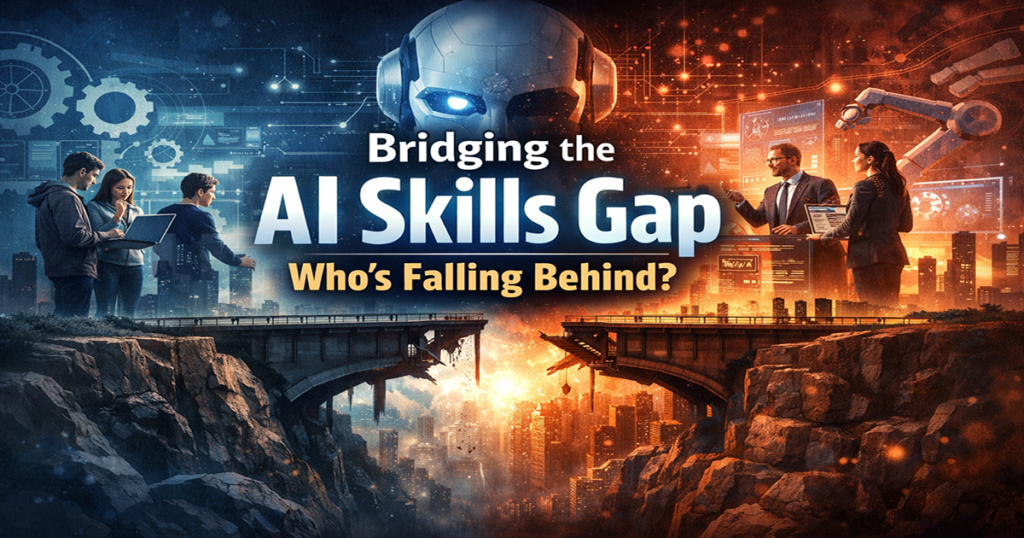
Legacy security frameworks are primarily signature-based or rule-based. While these systems remain valuable, their reactive design creates inherent latency. By contrast, autonomous AI models continuously iterate and self-optimize. The result is asymmetry: offense evolves exponentially, while defense upgrades incrementally.
AI Is Outpacing Traditional Cyber Defenses
The assertion that AI is outpacing traditional cyber defenses reflects measurable performance gaps. Static firewalls, periodic patch management, and conventional endpoint detection systems struggle against polymorphic AI-generated threats. Attack variants mutate faster than signature databases can update.
Moreover, autonomous attack frameworks simulate legitimate user behavior to evade anomaly detection. Behavioral analytics, once considered advanced, can be manipulated by AI systems trained to replicate normal traffic patterns. This erodes confidence in perimeter-based and heuristic-based detection models.
The commercial implications are significant. Enterprises relying solely on legacy infrastructure face increased exposure to zero-day vulnerabilities and lateral movement exploits. Insurance premiums, regulatory scrutiny, and reputational risk intensify as breach probabilities rise.
Cyber Defense Automation: Necessary but Not Sufficient
Cyber defense automation has emerged as a strategic countermeasure. Automated threat detection, AI-assisted incident response, and machine-speed containment protocols aim to reduce reaction time. However, automation alone does not guarantee parity with offensive AI systems.
Defensive AI must operate with contextual intelligence, integrating threat intelligence feeds, behavioral baselines, and predictive analytics. Security operations centers increasingly deploy AI-driven orchestration platforms capable of isolating compromised endpoints, rotating credentials, and triggering forensic workflows autonomously.
Yet the arms race persists. Offensive AI models continuously refine evasion techniques. Defensive systems must balance aggressive containment with minimizing false positives that disrupt legitimate operations. The economic calculus becomes complex: higher automation reduces labor costs but increases dependency on algorithmic accuracy.
AI-Driven Attacks vs Legacy Cyber Defenses
The structural conflict between AI-driven attacks vs legacy cyber defenses exposes architectural vulnerabilities. Many enterprise systems were designed for static threat environments. Network segmentation, patch cycles, and manual audit processes assume predictable attack patterns.
Autonomous AI disrupts this assumption. It identifies weak points in supply chains, third-party integrations, and cloud misconfigurations with unprecedented efficiency. Attack surfaces expand as digital transformation accelerates, incorporating IoT endpoints, edge devices, and hybrid cloud infrastructures.
Legacy systems often lack real-time telemetry granularity. Without deep visibility into network behavior, detecting AI-generated micro-exploit attempts becomes difficult. As AI risk in cybersecurity 2026 intensifies, modernization of foundational infrastructure becomes unavoidable.
Impact of Autonomous AI on Cybersecurity Strategy
The Impact of Autonomous AI on Cybersecurity Strategy extends beyond tooling. Governance frameworks must adapt to algorithmic threat actors capable of independent decision-making. Traditional risk models based on probability and impact require recalibration to account for machine-speed escalation.
Strategic shifts include zero-trust architecture adoption, continuous authentication protocols, and micro-segmentation. Zero-trust models reduce implicit trust zones, limiting the effectiveness of lateral movement once a breach occurs. Continuous identity verification mitigates AI-powered credential exploitation.
Board-level oversight is also evolving. Cybersecurity is increasingly framed as enterprise risk management rather than IT expenditure. Investment allocation shifts toward predictive analytics, threat intelligence fusion, and AI-driven response ecosystems.
Economic Consequences of AI Cybersecurity Threats
AI cybersecurity threats carry substantial financial implications. Automated ransomware variants can simultaneously encrypt distributed systems across geographies. AI-assisted extortion models identify high-value assets and tailor negotiation tactics.
Downtime costs escalate as operational technology environments integrate with digital control systems. Manufacturing, logistics, healthcare, and financial services sectors face heightened exposure. Regulatory fines under data protection regimes compound breach-related losses.
At a macroeconomic level, the proliferation of AI-powered cyber attacks may influence national security doctrines. Critical infrastructure sectors require resilient cyber defense automation frameworks capable of responding at machine speed. Public-private collaboration becomes central to threat intelligence exchange.
AI Risk in Cybersecurity 2026: Strategic Forecast
AI risk in cybersecurity 2026 is projected to intensify along three dimensions: scale, sophistication, and autonomy. Scale refers to attack volume amplification through automated toolkits. Sophistication reflects improved evasion capabilities. Autonomy denotes reduced human oversight in offensive campaigns.
Emerging risks include AI-driven reconnaissance of generative AI systems themselves, model poisoning attacks, and adversarial data manipulation. As enterprises integrate AI into core operations, the attack surface expands to include algorithmic models and training pipelines.
Mitigation strategies emphasize secure AI development lifecycles, model validation protocols, and adversarial testing frameworks. Cyber defense automation must integrate AI governance with cybersecurity controls, ensuring that defensive models are continuously validated against adversarial manipulation.
Regulatory and Compliance Implications
Governments worldwide are drafting AI governance frameworks that intersect with cybersecurity mandates. Disclosure requirements for AI incidents, auditability standards for algorithmic decision-making, and mandatory risk assessments are becoming more prevalent.
Organizations operating across jurisdictions face compliance complexity. Cross-border data transfer regulations intersect with AI threat intelligence sharing protocols. Legal liability considerations evolve as autonomous systems influence breach dynamics.
Regulatory clarity may stimulate innovation in secure AI architectures. However, overregulation could impede rapid defensive deployment. Policymakers must balance innovation incentives with systemic resilience.
Strategic Path Forward
Addressing AI cybersecurity threats requires layered defense architecture anchored in adaptive intelligence. Investment in real-time monitoring, behavioral modeling, and automated response platforms is essential. Legacy systems require phased modernization to integrate with AI-native security frameworks.
Talent strategies must evolve as well. Cybersecurity professionals increasingly require expertise in machine learning, adversarial modeling, and algorithmic risk assessment. Interdisciplinary collaboration between data scientists and security architects becomes central to resilience.
Most critically, organizational mindset must shift from reactive defense to anticipatory resilience. Autonomous threats demand autonomous countermeasures. Enterprises that integrate AI into their defensive posture while maintaining governance oversight will likely outperform peers in breach mitigation and recovery speed.
Conclusion
AI cybersecurity threats are redefining the balance between offense and defense in digital ecosystems. AI-powered cyber attacks demonstrate adaptive, self-learning capabilities that challenge legacy infrastructure. Evidence suggests AI is outpacing traditional cyber defenses, necessitating accelerated adoption of cyber defense automation and strategic modernization.
The confrontation between AI-driven attacks vs legacy cyber defenses underscores a broader transformation in cybersecurity strategy. As AI risk in cybersecurity 2026 escalates, organizations must reassess architecture, governance, and investment priorities. The Impact of Autonomous AI on Cybersecurity Strategy will determine which enterprises maintain resilience in an era defined by algorithmic adversaries.