English




















































































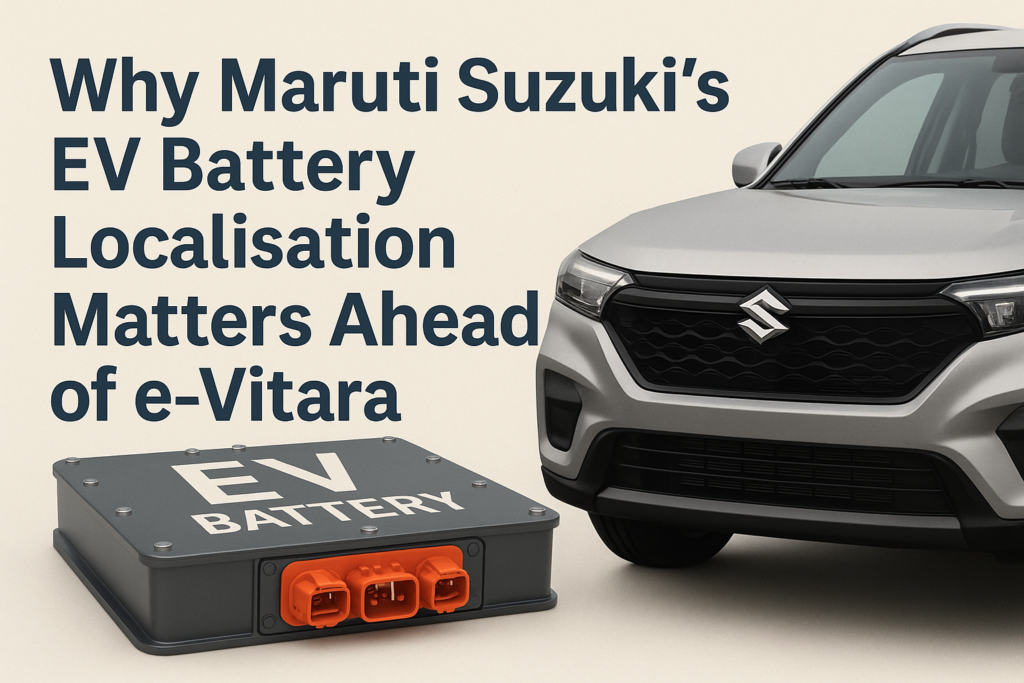


Maruti Suzuki Signals a Strategic Shift in Its EV Roadmap


Maruti Suzuki has taken a significant step in shaping its electric vehicle strategy by confirming plans to localise EV battery production ahead of the launch of the e-Vitara. The move reflects a broader recalibration within India’s largest passenger carmaker as it prepares to enter the battery electric vehicle segment at scale. At a time when EV adoption in India is accelerating, localisation of critical components such as batteries has become central to cost control, supply security, and consumer confidence.
Rather than relying entirely on imported battery packs, the company plans a phased localisation approach, aligning manufacturing depth with market maturity and demand growth.
Why EV Battery Localisation Is a Critical Move
EV batteries account for a substantial portion of an electric vehicle’s overall cost. Localising battery production allows automakers to reduce exposure to global supply chain volatility, currency fluctuations, and logistics disruptions. For Maruti Suzuki, this move is not only about cost efficiency but also about long-term sustainability of its EV portfolio.
Battery localisation also supports faster innovation cycles and closer integration with vehicle platforms. By building domestic capabilities over time, Maruti Suzuki aims to strengthen operational resilience while aligning with India’s push for self-reliance in advanced automotive technologies.
Preparing the Ground for the e-Vitara Launch
The localisation plan is closely linked to the upcoming e-Vitara, Maruti Suzuki’s first fully electric SUV. Expected to play a pivotal role in the company’s EV transition, the e-Vitara is positioned as a high-volume, globally relevant model. Ensuring battery supply stability ahead of its launch reduces execution risk and enables more predictable pricing strategies.
Industry observers view this preparation as a signal that Maruti Suzuki is taking a cautious but structured approach to electrification, prioritising readiness over speed.
What This Means for India’s EV Manufacturing Ecosystem
Maruti Suzuki’s localisation push has implications beyond its own product line. As a market leader, its decisions influence supplier investments, technology partnerships, and overall ecosystem development. Increased domestic production of EV batteries could encourage component manufacturers to scale up capacity, improve localisation depth, and invest in skill development.
This shift also aligns with broader policy objectives aimed at strengthening India’s EV value chain, reducing import dependence, and supporting long-term industrial competitiveness.
Impact on Consumers and the Market
From a consumer perspective, battery localisation has the potential to improve affordability and service reliability over time. Reduced dependence on imports can help stabilise pricing and improve availability of replacement components. While immediate cost benefits may be gradual, the long-term impact could support wider EV adoption across segments.
For the market, the move underscores a transition from experimental EV offerings toward a more structured, volume-driven electric mobility strategy.
A Strategic, Not Tactical, Transition
Maruti Suzuki’s decision to localise EV battery production ahead of the e-Vitara launch highlights a strategic shift rather than a short-term adjustment. By building domestic capabilities in phases, the company is positioning itself for sustained participation in India’s EV growth story. As competition intensifies and policy frameworks evolve, such foundational moves are likely to define which automakers successfully scale in the electric era.