English











































































Tesla Autopilot Marketing Ruled Deceptive by U.S. Judge


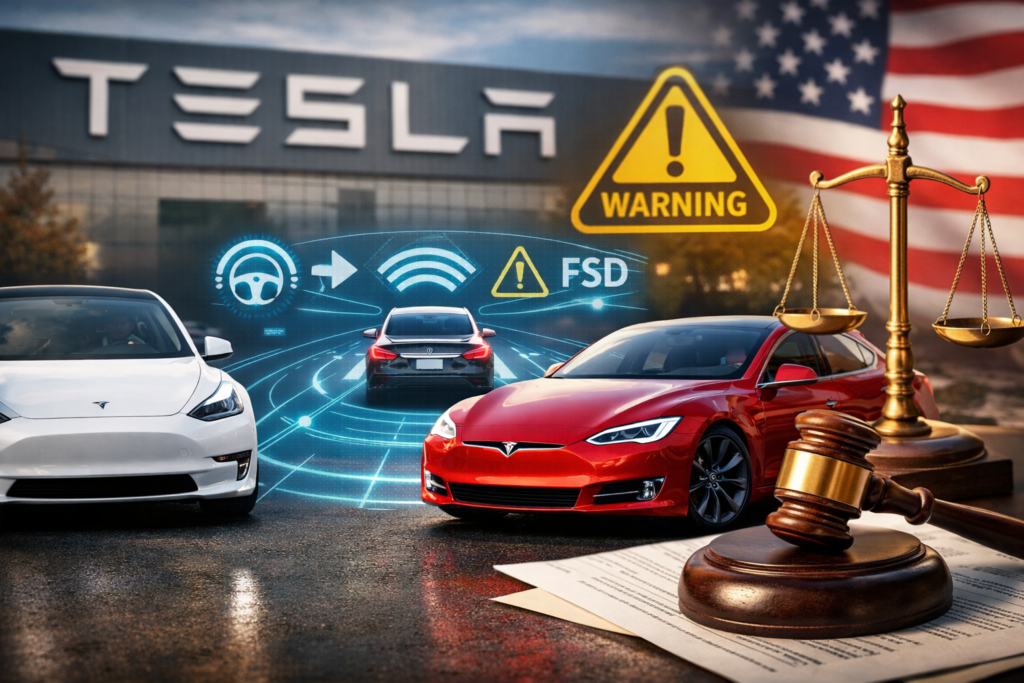
Tesla has once again come under regulatory and legal scrutiny after a U.S. judge ruled that the company engaged in deceptive marketing related to Autopilot and Full Self-Driving features. The decision intensifies the debate around how Autopilot vehicles are presented to consumers and whether branding language has outpaced real-world capabilities. As Tesla continues to lead public conversation around vehicle automation, the ruling underscores growing concerns over consumer expectations, safety assumptions, and the evolving definition of autonomous driving in the automotive industry.
Tesla, Autopilot, and the Legal Limits of Autonomous Driving Claims
Tesla has long positioned itself as a technology-first automaker, using bold messaging to distinguish its vehicles in a highly competitive global market. Central to that strategy has been the promotion of Autopilot and Full Self-Driving systems, features that suggest a future where vehicles require minimal human involvement. The recent court ruling challenges that narrative, concluding that Tesla’s marketing language may have misled consumers regarding the actual capabilities of these systems.
The case represents a significant moment for Tesla because it moves beyond regulatory warnings into judicial determination. Unlike advisory statements from transportation authorities, a court ruling carries broader implications for how automakers communicate advanced driver-assistance technologies. The judgment reinforces the principle that innovation-driven branding must still align precisely with technical reality.
Understanding Tesla’s Autopilot and Full Self-Driving Systems
Tesla’s Autopilot system is designed as an advanced driver-assistance platform, providing lane keeping, adaptive cruise control, and traffic-aware navigation under specific conditions. Full Self-Driving, despite its name, does not currently enable fully autonomous operation without driver supervision. Both systems require continuous human attention, a point repeatedly emphasized in user manuals and on-screen warnings.
The legal challenge arose from how these features were marketed rather than how they were technically documented. Courts examined whether average consumers, influenced by promotional language and public statements, could reasonably interpret Autopilot and Full Self-Driving as autonomous technologies. The ruling suggests that naming conventions and marketing narratives carry substantial weight in shaping consumer perception.
Why the Court Found Tesla’s Marketing Deceptive
The judge’s ruling focused on the gap between consumer expectations and real-world functionality. Marketing materials, public demonstrations, and feature names were evaluated in context, not isolation. While disclaimers existed, the court determined that they did not sufficiently counterbalance broader messaging that implied near-autonomous capability.
This decision does not assert that Tesla’s technology is unsafe by default. Instead, it highlights how marketing emphasis can create unrealistic assumptions about driver responsibility. For Autopilot vehicles, such assumptions can have direct safety consequences, particularly if drivers overestimate system autonomy.
Implications for Tesla as a Brand
For Tesla, the ruling presents both reputational and strategic challenges. The company has built significant brand equity around technological leadership, and any judicial finding of deceptive marketing risks eroding consumer trust. In an industry where confidence in safety systems is paramount, perception can be as influential as performance.
From a commercial standpoint, the decision may prompt Tesla to revise naming conventions, adjust advertising language, or introduce clearer consumer education around system limitations. Such changes could affect how future Autopilot and Full Self-Driving updates are rolled out and priced.
Broader Impact on the Automotive Industry
The ruling extends beyond Tesla, setting a precedent that other automakers will closely observe. As driver-assistance systems grow more sophisticated, manufacturers face pressure to differentiate products without overstating autonomy. Regulatory agencies and courts are increasingly attentive to how terms like “self-driving” and “autonomous” are used in consumer-facing communications.
This case signals a shift toward stricter accountability, particularly as semi-autonomous features become more common across vehicle segments. Automakers marketing similar technologies may reassess their messaging to avoid comparable legal exposure.
Consumer Awareness and Autopilot Vehicles
For consumers, the ruling reinforces the importance of understanding what Autopilot vehicles can and cannot do. Advanced driver-assistance systems are designed to support drivers, not replace them. Misinterpretation of these systems can lead to misuse, which regulators and safety advocates argue is preventable through clearer communication.
The decision may also encourage buyers to scrutinize feature descriptions more carefully, relying on independent evaluations rather than promotional headlines. Increased transparency benefits both consumers and manufacturers by aligning expectations with actual performance.
Regulatory Momentum Around Autonomous Technology
The Tesla case aligns with a broader regulatory movement addressing emerging automotive technologies. Governments and transportation authorities worldwide are developing frameworks to classify autonomy levels and standardize terminology. Judicial rulings such as this one add enforcement weight to those efforts.
As autonomous development continues, legal clarity will play a crucial role in determining how innovation reaches the market. Tesla’s experience illustrates the risks of operating in regulatory gray areas while public adoption outpaces formal definitions.
Commercial Consequences and Investor Considerations
From a commercial investigation perspective, the ruling may influence investor sentiment, particularly regarding Tesla’s long-term autonomy roadmap. While the company remains a market leader, legal constraints on marketing could slow consumer adoption of premium software features tied to Full Self-Driving.
Investors often view autonomy as a major growth driver for Tesla. Any limitations on how those capabilities are communicated could affect revenue projections, especially if regulatory scrutiny increases globally.
The Future of Tesla’s Autonomy Messaging
Tesla is unlikely to abandon its pursuit of full autonomy, but the ruling suggests a recalibration of how progress is communicated. Greater emphasis on incremental improvements and clearly defined driver roles may replace aspirational language that blurs technical boundaries.
Such a shift could ultimately strengthen Tesla’s credibility by aligning innovation with transparency. In a sector where public trust is essential, precision in language may become a competitive advantage rather than a constraint.
Conclusion
The court ruling on Tesla’s Autopilot and Full Self-Driving marketing marks a pivotal moment in the evolution of autonomous vehicle communication. By labeling certain claims as deceptive, the judgment underscores the responsibility automakers carry when promoting advanced technologies. For Tesla, the decision presents an opportunity to refine its messaging, reinforce consumer trust, and set clearer expectations for Autopilot vehicles. For the industry at large, it serves as a reminder that innovation must advance alongside accountability, especially when public safety and consumer understanding are at stake.