English



























































































IPL Costliest Overseas Buy and Earns ₹18 Crore

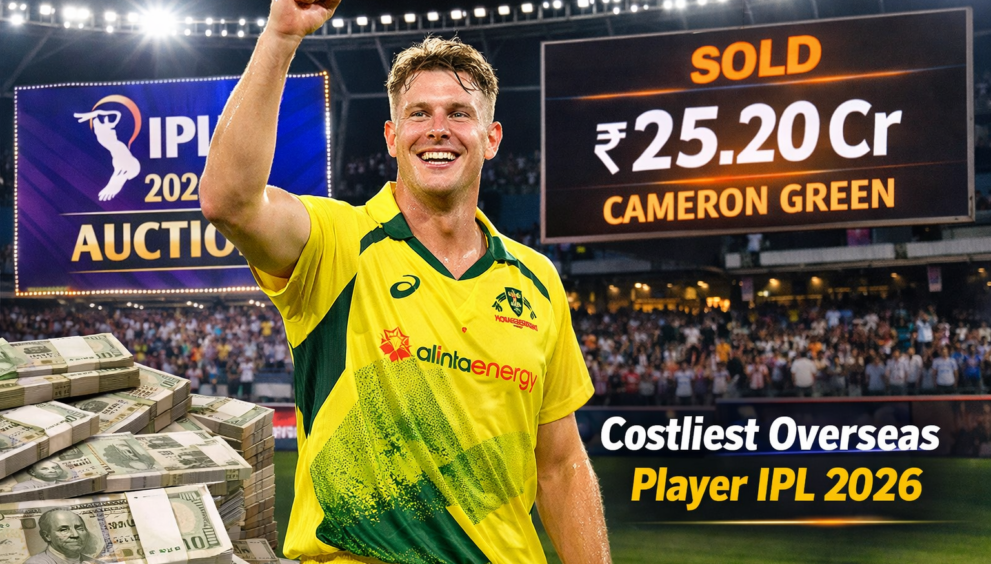
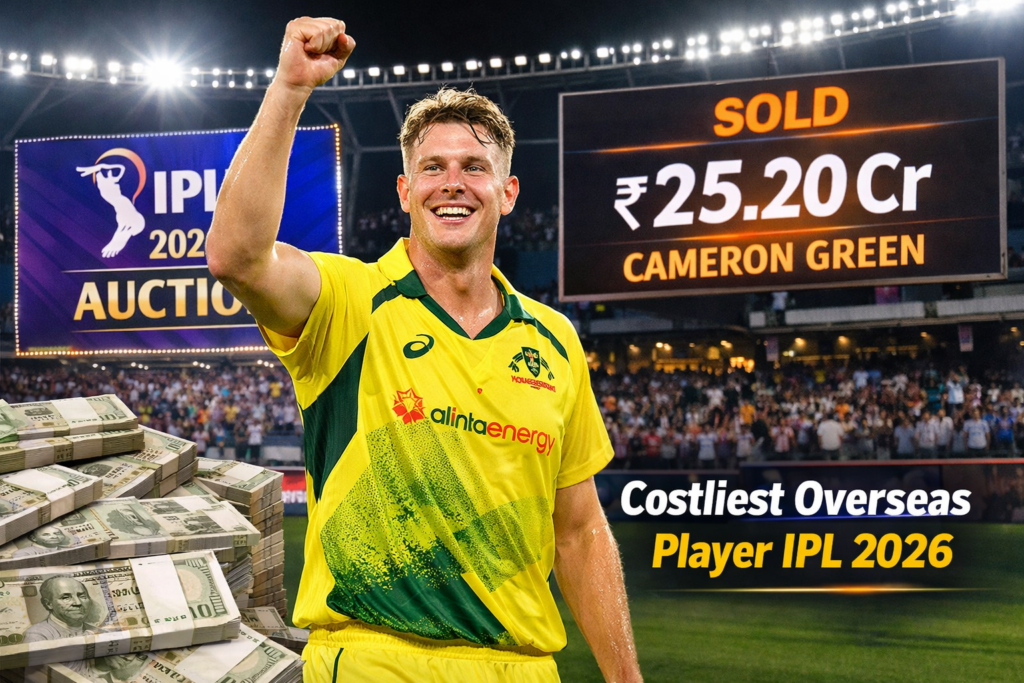
Cameron Green emerged as one of the headline acts of the IPL 2026 Auction, securing a staggering ₹25.20 crore bid to become the costliest overseas player in IPL history. The Australian cricket team all-rounder’s historic price tag generated widespread attention, yet under IPL salary cap rules his actual earnings are limited to ₹18 crore. This discrepancy between record bid and payout highlights evolving auction mechanics and commercial investment dynamics in the league’s premium talent market.
Cameron Green’s Record Auction Performance
Australian cricket team all-rounder Cameron Green made headlines at the IPL 2026 Auction when he was bought by the Kolkata Knight Riders (KKR) for a record ₹25.20 crore, surpassing all previous overseas bids in the league’s history. Despite the extraordinary bid figure, IPL salary cap regulations mean that Green’s net earnings for the season will be capped at ₹18 crore. This development has sparked extensive analysis and debate within cricket and sports finance circles about how auction strategies and rules intersect in the world’s most lucrative T20 league.
The intense bidding battle for Green involved multiple franchises, with KKR ultimately prevailing over competitors. The franchise’s aggressive strategy positioned Green not only as a cornerstone of their 2026 campaign but also as a symbol of the escalating commercial value placed on versatile all-round talent in Twenty20 cricket.
Understanding the Auction Mechanics
The Indian Premier League operates under a structured auction framework designed to balance spending power across franchises while maintaining competitive equity. Within this framework, a “maximum fee” rule for overseas players was introduced ahead of the IPL 2025 Auction and continued into the IPL 2026 mini-auction. Under this rule, even if the winning bid for a foreign player exceeds a certain threshold, that player’s actual salary is capped at a fixed amount set by the IPL governing council. For the IPL 2026 cycle, this cap is ₹18 crore.
In Cameron Green’s case, although the final bid exceeded the cap by over ₹7 crore, the difference will be allocated toward player welfare and developmental funds under IPL governance policies. This mechanism reflects a broader effort to ensure financial sustainability across franchises while retaining high quality international talent.
The Significance of Being the Costliest Overseas Player
Green’s acquisition price of ₹25.20 crore places him at the top of the costliest overseas players list in IPL history, overtaking figures such as Mitchell Starc, who was previously bought for ₹24.75 crore. However, the actual royalty paid to Green is in line with the IPL’s highest retention fee band, aligning his earnings with stalwarts such as Rishabh Pant and other top Indian signings.
This distinction between auction bid and take-home salary underscores the complexity of modern franchise cricket economics, where headline figures drive media value, brand engagement, and broadcast interest, even when regulatory clauses temper actual payouts.
Cameron Green’s Role as an All-Rounder
Green’s value in the IPL 2026 Auction stemmed not only from his statistical achievements but also from his versatility. The Australian all-rounder brings a multidimensional skill set that combines powerful hitting, fast bowling capabilities, and athletic fielding—traits highly prized in the dynamic T20 format. This blend of skills places him among the most sought-after players globally, especially in leagues where tactical flexibility and match-winning potential are paramount.
In previous IPL seasons, Green showcased his adaptability with noteworthy performances for franchises like the Mumbai Indians and Royal Challengers Bangalore, contributing substantial runs and crucial wickets when called upon. These credentials enhanced his appeal at the 2026 Auction, justifying the intense bidding interest from multiple franchises.
Auction Strategy and Franchise Investment
KKR’s decision to invest significantly in Green reflects a broader shift in franchise auction strategies, where teams are increasingly allocating large portions of their budget to secure marquee overseas talent with proven international credentials. This approach aims to fortify squads with players capable of influencing multiple facets of play, particularly in clutch situations.
At the same time, the cap-adjusted payout paradigm introduces a strategic layer whereby franchises can leverage the publicity associated with high bids while aligning actual salary commitments with financial regulations. This dynamic allows teams to enhance fan engagement and sponsor visibility without disproportionately impacting budget sustainability.
Comparative Auction Records
Historically, IPL auctions have seen dramatic bidding wars and record figures, with players like Rishabh Pant and Shreyas Iyer ranking top in overall auction premiums. While Green’s ₹25.20 crore bid sits prominently among them, the cap limitation positions his actual earnings in the same bracket as top retention salaries for elite players.
This comparative context signals how auction economics continue to evolve, balancing commercial spectacle with regulatory frameworks designed to preserve competitive balance and fiscal responsibility across the league.
Impact on the IPL 2026 Season
As the season unfolds, Green’s performance will be closely watched given the investment and expectations placed upon him. The KKR squad composition and on-field strategies are likely to revolve around his role as a match influencer. Analysts project that Green’s participation in key match situations could tilt outcomes, particularly in powerplay overs and death bowling scenarios, bolstering KKR’s championship aspirations.
From a wider perspective, the auction results also highlight how franchise priorities are shifting toward all-round players who offer balance across batting and bowling—an attribute that enhances team flexibility over the duration of a long tournament.
Commercial and Market Implications
The public and commercial response to Cameron Green’s auction outcome demonstrates the substantial economic footprint of cricket’s premier T20 league. High-value bids generate media traction, social media discourse, brand partnerships, and increased viewership interest, amplifying the IPL’s status as a global sporting phenomenon.
Moreover, the auction dynamics influence player valuations and contract expectations internationally, setting benchmarks for other franchise competitions to evaluate talent investment strategies against performance potential and brand impact.
Conclusion
Cameron Green’s journey through the IPL 2026 Auction encapsulates key trends shaping modern franchise cricket—from record-breaking bids to regulatory salary caps, from commercial valuation to strategic roster building. The Australian cricket team all-rounder’s historic event reflects both the thrilling unpredictability of auction markets and the structural frameworks that govern player compensation. As the IPL season progresses, the interplay between auction investment, on-field performance, and commercial value will continue to define narratives around elite international talent in the world’s most watched T20 competition.