English











































































AI Search Traffic Changes and SEO Impact

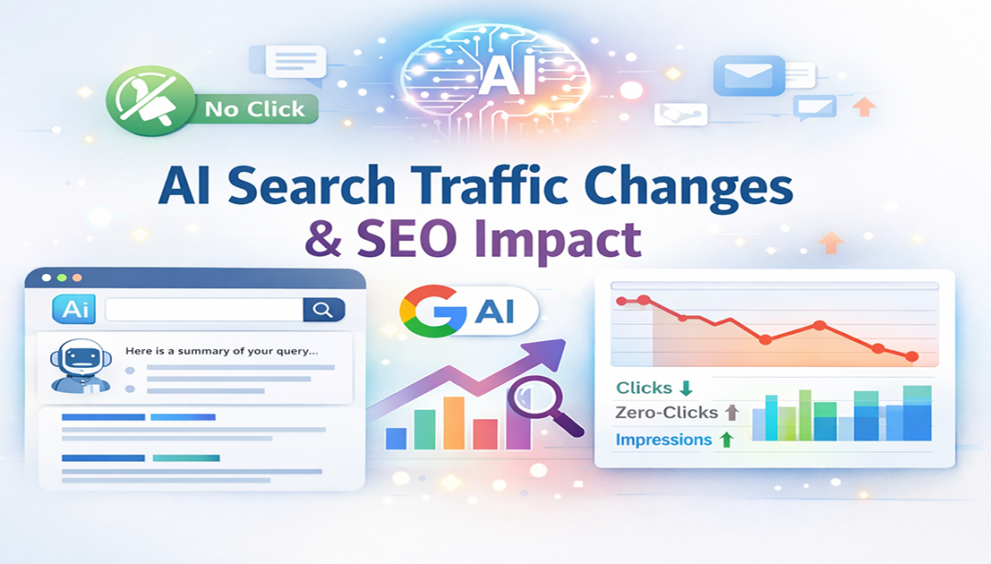
AI search traffic changes are redefining digital performance benchmarks as AI search impact on website traffic accelerates across industries. The zero-click search effect on SEO, combined with the Google AI Overviews traffic shift, has altered AI-driven search visibility and generative search traffic trends. Marketing in age of AI search now requires a clear understanding of why traffic numbers look different AI search environments. AI search versus traditional SEO models reveals a measurable shift in attribution, impressions, and engagement metrics, demanding strategic adaptation in content, analytics, and performance forecasting.
Understanding AI Search Traffic Changes
AI search traffic changes refer to measurable differences in referral patterns, click-through rates, impressions, and on-site engagement caused by AI-powered search interfaces. Generative responses, conversational summaries, and embedded answer modules increasingly satisfy user intent directly within search engine environments.

Traditional SEO relied on ranking positions to generate clicks. In contrast, AI-driven search visibility often provides synthesized answers that reduce the necessity for outbound traffic. As a result, marketing teams observe stable or rising impressions alongside declining click volumes.
The central question behind why traffic numbers look different AI search contexts lies in behavioral evolution. Users interact differently with AI-generated content, often consuming summaries without navigating to source domains.
The Zero-Click Search Effect on SEO
The zero-click search effect on SEO has intensified with AI-generated search overviews. In these scenarios, search engines display consolidated information extracted from multiple sources, effectively reducing the incentive to visit individual websites.
AI search traffic changes amplify this effect by merging ranking visibility with content summarization. Even when a site contributes to a generative answer, the click-through opportunity may diminish. This introduces a new form of visibility that does not translate directly into sessions.
For publishers and marketers, zero-click environments require a redefinition of value. Brand exposure, authority reinforcement, and citation presence within AI summaries become performance indicators alongside traditional traffic metrics.
Google AI Overviews Traffic Shift
The Google AI Overviews traffic shift represents a structural transformation in search presentation. AI-generated overviews appear prominently, often preceding organic listings. These summaries aggregate information contextually rather than sequentially.
AI search versus traditional SEO becomes particularly evident in this format. Conventional ranking optimization focuses on position-based competition. AI Overviews emphasize semantic relevance and contextual authority. Content optimized for clarity, structured data, and comprehensive coverage is more likely to be referenced in generative outputs.
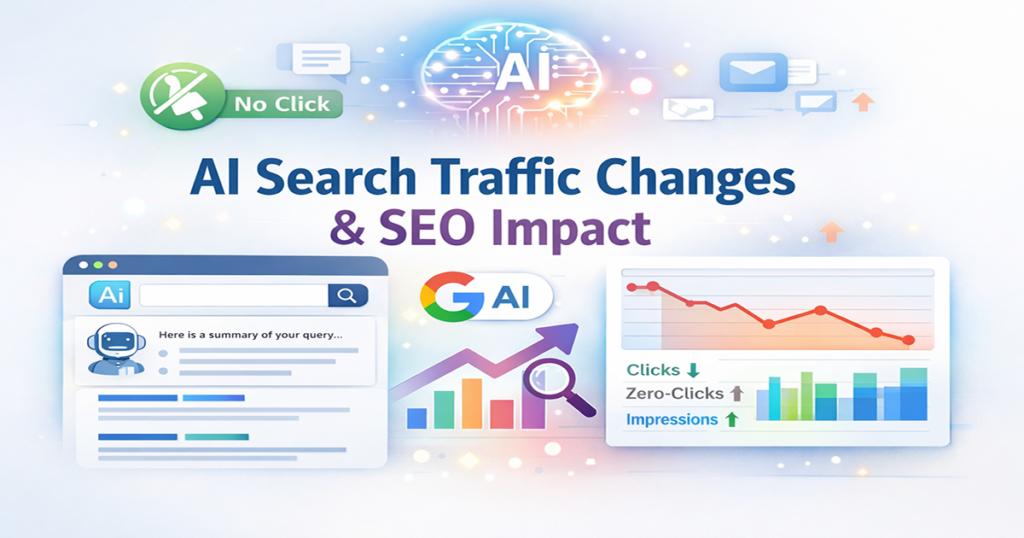
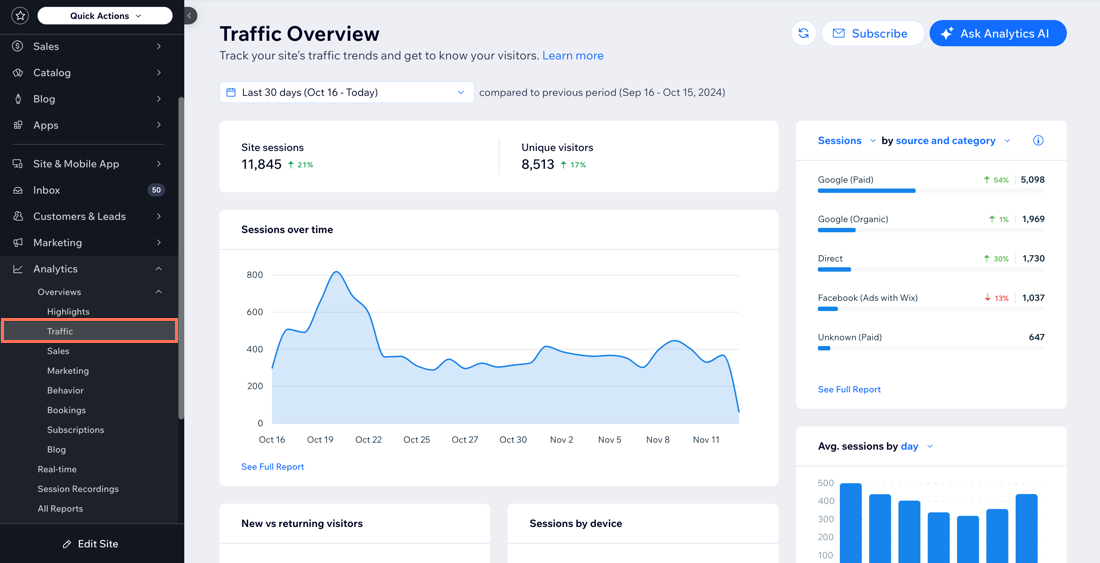
AI search traffic changes associated with Google AI Overviews traffic shift often manifest as increased impressions but lower organic click-through rates. This discrepancy leads to analytical confusion unless performance frameworks are updated.
Generative Search Traffic Trends
Generative search traffic trends highlight a move from keyword-centric navigation to intent-driven discovery. AI models interpret natural language queries and synthesize multi-source answers. This alters how search demand translates into site visits.
AI-driven search visibility depends on topical authority, structured formatting, and entity-based optimization. Content that demonstrates subject depth and semantic alignment gains inclusion in generative outputs.
Understanding AI search traffic shifts and metrics requires distinguishing between impression visibility, citation frequency, and downstream engagement. While direct traffic may fluctuate, brand awareness and assisted conversions may increase.
AI Search Impact on Website Traffic Metrics
AI search impact on website traffic extends beyond volume reduction. Analytics platforms frequently categorize AI-driven interactions differently. Referral paths may include new parameters or aggregated sources, complicating attribution.
Marketing teams often report anomalies in bounce rates, average session durations, and conversion attribution. These anomalies arise because users entering from AI-enhanced search may exhibit different intent stages compared to traditional search visitors.
Why traffic numbers look different AI search contexts is therefore both behavioral and technical. Behavioral changes stem from user satisfaction within AI summaries. Technical changes stem from evolving referral structures and tracking limitations.
Marketing in Age of AI Search
Marketing in age of AI search demands strategic recalibration. Content strategy must address both discoverability and citability. AI search and zero-click trends for marketers emphasize authority-building rather than solely click acquisition.
Editorial depth, factual clarity, and structured headings increase the probability of AI-driven search visibility. Additionally, brand mentions within authoritative contexts enhance recognition when generative responses cite or paraphrase content.
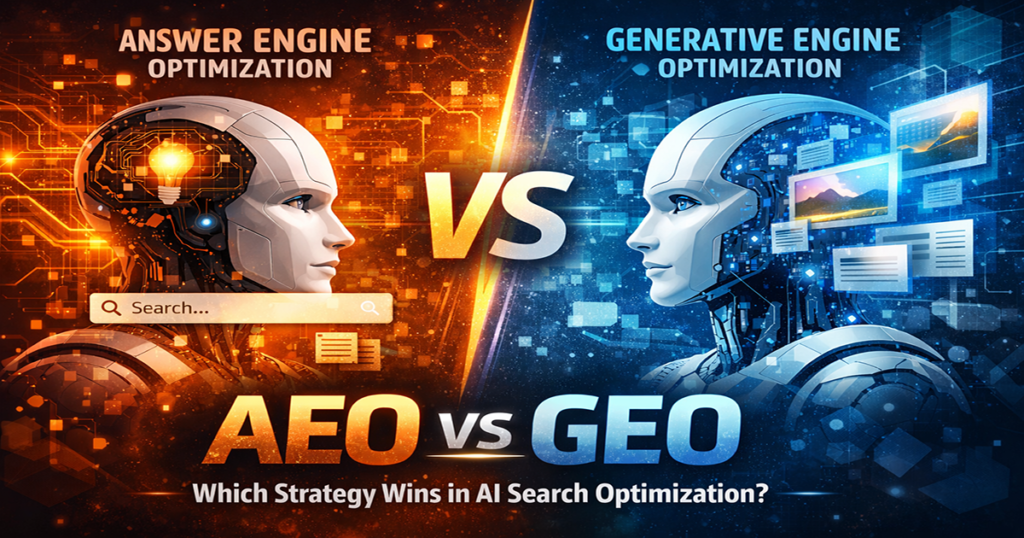
AI search versus traditional SEO no longer operates as a binary choice. Instead, both coexist. Traditional optimization ensures crawlability and ranking potential, while AI-focused optimization enhances inclusion in synthesized outputs.
Adapting SEO for AI-Powered Search Environments
Adapting SEO for AI-Powered search environments requires prioritizing semantic architecture. Content clusters, schema markup, and entity optimization become essential. AI models interpret relationships between concepts rather than isolated keywords.
AI network visibility frameworks increasingly value expertise signals. Authoritative references, consistent topical coverage, and structured formatting strengthen AI inclusion probability.
AI search traffic changes also encourage diversified acquisition strategies. Reliance on organic clicks alone exposes businesses to volatility. Integrating content marketing, email nurturing, and community engagement mitigates traffic fluctuations.
Commercial Investigation: Revenue Implications
AI search traffic changes carry direct commercial consequences. Lower click-through rates can influence advertising revenue, affiliate conversions, and lead generation pipelines. Publishers dependent on page views face monetization pressure.
However, generative search traffic trends also create opportunities. Brand recognition within AI summaries can drive higher-intent direct traffic. Enterprises optimizing for AI-driven search visibility may capture enterprise-level leads through enhanced authority positioning.
Commercial analysis suggests that marketing investments must shift toward comprehensive measurement models. Assisted conversions, brand lift metrics, and multi-touch attribution gain importance in evaluating ROI.
Analytics Evolution in AI Search Era
Understanding AI search traffic shifts and metrics requires updated analytics frameworks. Traditional last-click attribution underestimates the value of AI summary inclusion. Multi-channel funnels provide a more accurate representation of influence.
Search console impression growth paired with stable conversions may indicate positive AI-driven search visibility despite declining sessions. This nuance is critical for executive reporting.
AI search impact on website traffic thus becomes less about raw volume and more about qualified engagement. Organizations that interpret data contextually rather than reactively maintain strategic clarity.
AI Search Versus Traditional SEO: Strategic Balance
AI search versus traditional SEO represents an evolutionary continuum rather than replacement. Ranking factors remain relevant, yet contextual relevance and authority signals dominate generative inclusion.
Content strategy must integrate structured data, clear subheadings, and concise explanations suitable for extraction into AI-generated responses. Long-form depth remains valuable, particularly when addressing complex queries.
AI search traffic changes illustrate that optimization now spans both ranking algorithms and generative language models. The convergence of these systems defines contemporary digital visibility.
The Future of AI Search Traffic Changes
AI search traffic changes are unlikely to stabilize in the near term. As generative models mature, search interfaces may become increasingly conversational. Personalized AI assistants could mediate information retrieval entirely.
For marketers, adaptability becomes a competitive advantage. AI search and zero-click trends for marketers emphasize agility in content experimentation and performance interpretation.
Organizations that embrace adapting SEO for AI-Powered search environments will benefit from sustained visibility. Those anchored solely in legacy metrics risk misinterpreting strategic performance.
Conclusion: Redefining Traffic Value in AI-Driven Search
AI search traffic changes redefine digital marketing performance indicators. The zero-click search effect on SEO, the Google AI Overviews traffic shift, and evolving generative search traffic trends collectively alter how website traffic is generated and measured.
Understanding AI search traffic shifts and metrics requires contextual analysis rather than surface-level comparisons. AI-driven search visibility offers brand authority exposure even when click volume declines. Marketing in age of AI search demands a dual strategy balancing traditional ranking optimization with generative inclusion readiness.
As AI search versus traditional SEO frameworks continue converging, strategic clarity and measurement sophistication determine competitive positioning in the evolving search landscape.