English
























































































AI Adoption in Financial Services & Risk

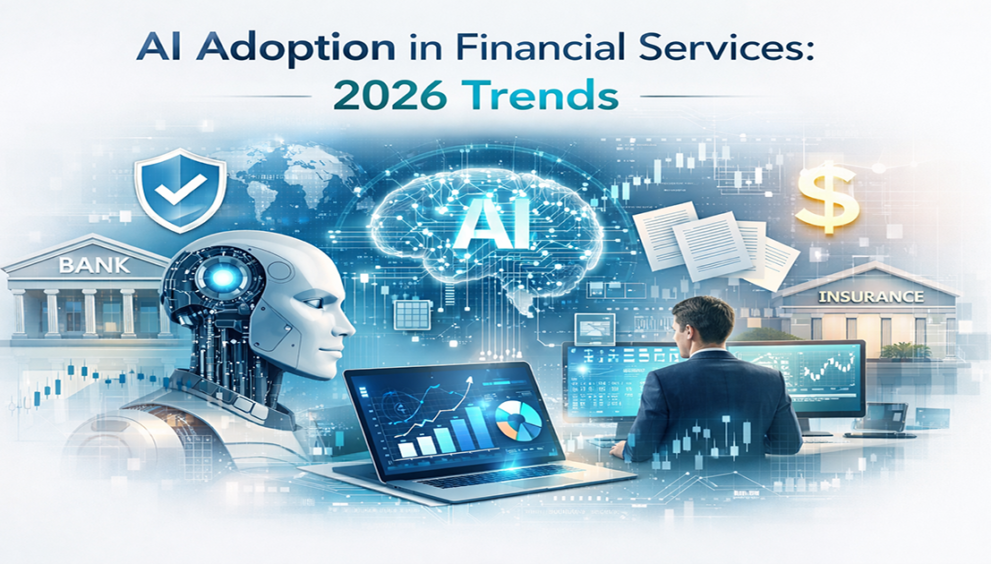
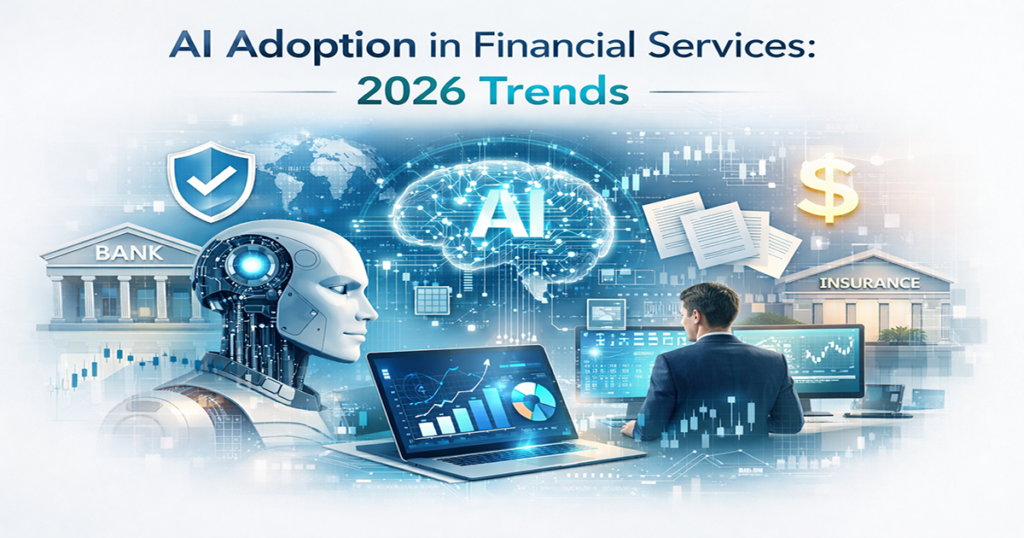
AI adoption in financial services is redefining competitive advantage across global markets. From financial services AI deployment in core banking platforms to generative AI in financial services transforming customer engagement, institutions are rapidly scaling innovation. AI in banking and finance now supports risk analytics, fraud detection, compliance automation, and hyper-personalized advisory models. Emerging AI adoption trends finance industry leaders must address include regulatory alignment, AI risk and governance financial sector controls, and hybrid AI strategies for financial services digital transformation. Trends in AI deployment across global banks and insurers reveal a structural shift toward enterprise-wide AI integration rather than isolated pilot programs.
AI Adoption in Financial Services: Strategic Transformation at Scale
AI adoption in financial services has transitioned from experimental proof-of-concept initiatives to enterprise-wide transformation programs. Global banks, insurers, asset managers, and fintech institutions are embedding artificial intelligence across front-office, middle-office, and back-office functions to enhance efficiency, resilience, and profitability. The acceleration is driven by regulatory complexity, digital-native competitors, evolving customer expectations, and the operational pressures of global financial volatility.
Financial services AI deployment now spans credit underwriting, algorithmic trading, anti-money laundering systems, capital optimization, and predictive claims processing. The integration of AI in banking and finance is no longer optional; it represents a structural evolution in institutional operating models. Institutions that fail to scale AI capabilities risk erosion of market share and operational inefficiency.
AI Deployment Across Core Banking and Insurance Operations
The first wave of AI in banking and finance focused primarily on automation. Robotic process automation combined with machine learning enabled transaction reconciliation, fraud alerts, and customer onboarding verification at scale. The second wave introduced predictive analytics, supporting credit scoring, liquidity forecasting, and behavioral risk assessment. The current phase is defined by generative AI in financial services and advanced cognitive systems capable of contextual reasoning, documentation synthesis, and conversational intelligence.
In retail banking, AI adoption in financial services enhances customer segmentation and personalization. Intelligent systems analyze transactional data, credit patterns, and behavioral signals to deliver customized financial products. In corporate banking, AI models optimize treasury management, trade finance workflows, and exposure modeling.
Insurance markets are experiencing parallel transformation. AI use cases in financial services now include automated claims adjudication, image recognition for damage assessment, dynamic pricing models, and catastrophe risk modeling powered by predictive analytics. Trends in AI deployment across global banks and insurers demonstrate convergence between traditional underwriting expertise and data-driven modeling.
Generative AI in Financial Services: Beyond Automation
Generative AI in financial services represents a pivotal inflection point. Unlike traditional machine learning models, generative systems synthesize content, generate reports, summarize regulatory documents, and simulate financial scenarios in real time. These capabilities significantly reduce administrative overhead while improving strategic decision-making.
In investment banking, generative AI drafts market analysis reports and scenario simulations. In wealth management, it enhances portfolio commentary, economic outlook narratives, and client engagement communications. Financial services AI deployment increasingly incorporates large language models to assist compliance teams in regulatory interpretation and policy alignment.
However, generative AI introduces governance complexities. Hallucination risks, data leakage concerns, and bias propagation require robust AI risk and governance financial sector frameworks. Institutions must implement model validation processes, audit trails, and human oversight layers to maintain regulatory compliance and operational integrity.
AI Risk and Governance Financial Sector Frameworks
AI adoption in financial services must operate within stringent regulatory ecosystems. Financial regulators across jurisdictions are emphasizing explainability, transparency, fairness, and accountability in algorithmic decision-making. AI risk and governance financial sector controls are therefore becoming foundational pillars of digital transformation strategies.
Model risk management frameworks are evolving to incorporate AI lifecycle monitoring, bias detection systems, and continuous performance validation. Governance structures typically include cross-functional oversight committees combining risk officers, data scientists, compliance leaders, and executive management.
Regulatory bodies increasingly expect documentation of AI model assumptions, training datasets, and decision logic. Financial services AI deployment must therefore integrate compliance-by-design architectures. Failure to align AI initiatives with governance standards may result in operational, reputational, and legal consequences.
AI Adoption Trends Finance Industry Leaders Must Monitor
AI adoption trends finance industry analysis reveals five structural shifts shaping the next phase of transformation. First, AI investment is migrating from innovation labs to enterprise platforms. Institutions are consolidating fragmented AI initiatives into centralized AI centers of excellence. Second, cloud-native AI infrastructure is enabling scalable experimentation and faster deployment cycles. Third, hybrid AI strategies for financial services digital transformation are emerging, combining on-premise data controls with cloud-based computational scalability.
Fourth, partnerships between traditional financial institutions and fintech AI providers are expanding. Strategic alliances accelerate capability acquisition while mitigating internal development timelines. Fifth, data governance is becoming as critical as algorithm sophistication. Data quality, lineage tracking, and secure integration frameworks underpin effective AI outcomes. Trends in AI deployment across global banks and insurers indicate a maturing market in which competitive differentiation increasingly depends on execution excellence rather than experimentation volume.
AI Use Cases in Financial Services Driving ROI
AI use cases in financial services are measurable through operational efficiency, cost reduction, revenue optimization, and risk mitigation. Fraud detection systems powered by machine learning reduce false positives while identifying anomalous behavior patterns in real time. Predictive credit scoring enhances loan approval accuracy and minimizes default exposure.
In capital markets, AI algorithms optimize trade execution strategies, analyze sentiment signals, and support quantitative modeling. Asset management firms deploy AI to rebalance portfolios dynamically in response to macroeconomic signals.
Customer experience transformation is another core driver. Conversational AI interfaces streamline onboarding processes, resolve service inquiries, and reduce call center costs. Financial services AI deployment aligns operational efficiency with enhanced client satisfaction metrics.
Hybrid AI Strategies for Financial Services Digital Transformation
Hybrid AI strategies for financial services digital transformation combine private infrastructure control with cloud-based AI services. Given the sensitivity of financial data, institutions often maintain core systems within secure environments while leveraging external AI platforms for advanced analytics and generative capabilities.
This hybrid architecture balances scalability with compliance. It allows institutions to experiment with emerging AI models while safeguarding proprietary datasets. Hybrid approaches also facilitate gradual migration from legacy systems to modern AI-driven ecosystems.
AI adoption in financial services increasingly requires integration with existing enterprise resource planning systems, risk engines, and compliance platforms. Interoperability and modular architecture design are critical success factors.
Competitive Advantage Through Responsible AI
AI adoption in financial services generates competitive advantage only when aligned with ethical standards and regulatory frameworks. Responsible AI initiatives address fairness, bias mitigation, transparency, and accountability. Institutions that proactively implement AI governance models build stakeholder trust and strengthen brand credibility.
Environmental, social, and governance considerations now intersect with AI strategy. Financial institutions face scrutiny regarding algorithmic fairness in lending practices and insurance pricing. AI risk and governance financial sector programs must therefore integrate ethical evaluation metrics. The strategic imperative extends beyond compliance. Trust-driven AI adoption enhances customer loyalty and investor confidence, positioning institutions as leaders in sustainable innovation.
Global Outlook: 2026 and Beyond
Looking ahead, AI adoption in financial services will deepen across emerging markets and established financial centers alike. Cross-border regulatory coordination may standardize AI compliance expectations. Institutions will likely expand AI deployment into macroeconomic forecasting, decentralized finance analytics, and real-time systemic risk monitoring.
Generative AI in financial services is expected to mature through domain-specific models trained on curated financial datasets. These specialized systems may improve accuracy while reducing hallucination risk. Financial services AI deployment will also intersect with quantum computing research, cybersecurity advancements, and blockchain-based identity systems. The convergence of these technologies may redefine operational resilience frameworks.
Conclusion: Structural Transformation, Not Incremental Change
AI adoption in financial services represents structural transformation rather than incremental digital enhancement. Institutions that integrate AI across governance, risk, compliance, customer engagement, and capital optimization frameworks will define the next generation of financial leadership.
AI in banking and finance is transitioning from competitive differentiator to operational necessity. Trends in AI deployment across global banks and insurers demonstrate that enterprise-wide integration, supported by rigorous AI risk and governance financial sector frameworks, is becoming standard practice.
The trajectory of AI adoption trends finance industry leaders must follow is clear: scalable deployment, responsible governance, hybrid infrastructure strategies, and measurable ROI alignment. Generative AI in financial services further accelerates this transformation, reshaping how financial knowledge is created, interpreted, and delivered. As global markets evolve, AI adoption in financial services will continue to redefine efficiency, resilience, and innovation at scale. Institutions that approach deployment strategically, ethically, and systematically will secure sustained competitive advantage in an increasingly intelligent financial ecosystem.