English























































What Most Finance Professionals Don’t Know About Banking and Finance Certifications

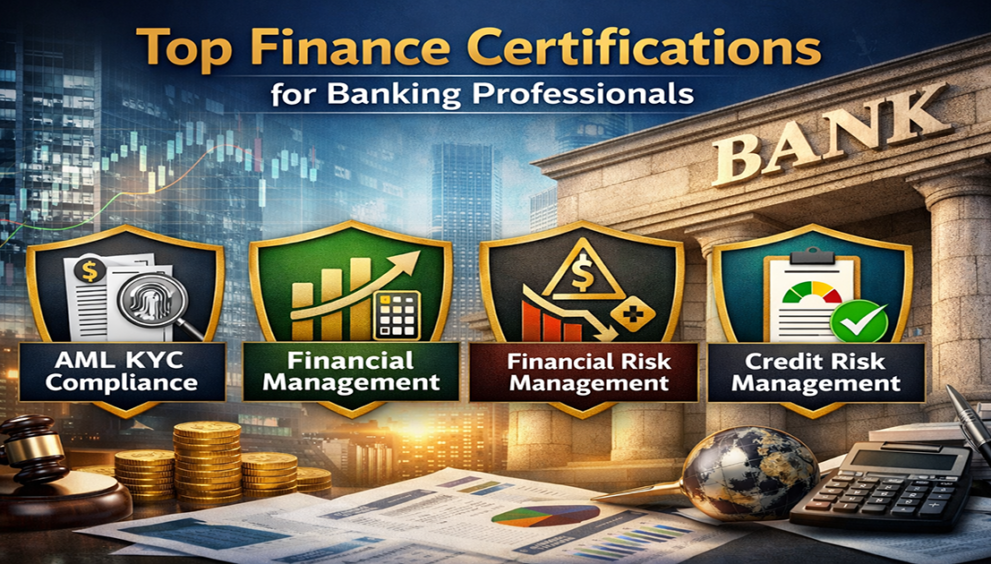
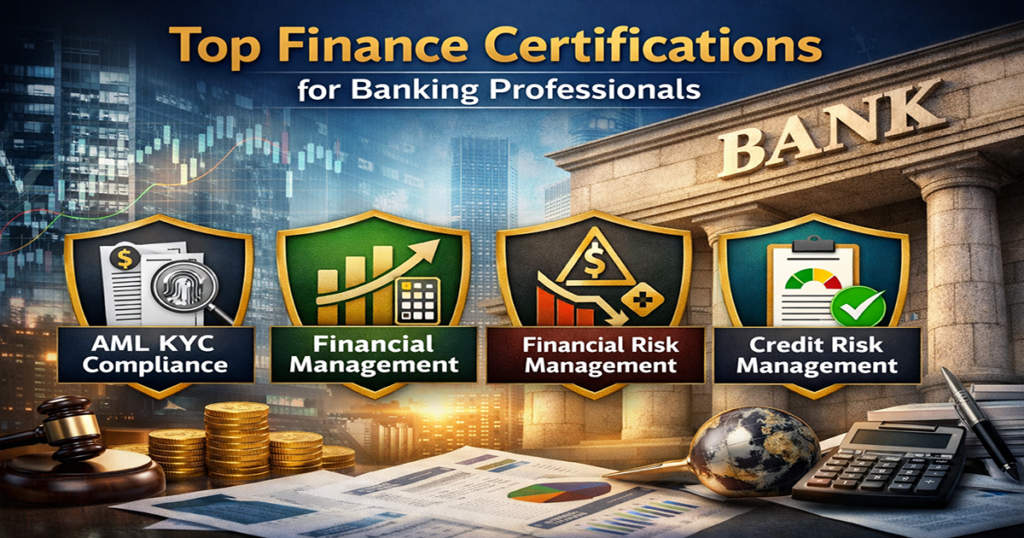
The global financial industry continues to evolve rapidly as regulatory frameworks, digital banking systems, and risk management practices become more sophisticated. Professionals working in banking, finance, compliance, and financial risk management increasingly seek specialized credentials to remain competitive in this changing environment. Recognized certifications such as AML KYC Compliance Certification, Financial Management Certification, Financial Risk Management Certification, and Credit Risk Manager Certification provide structured validation of expertise in regulatory compliance, financial strategy, risk assessment, and credit analysis. These certifications play a crucial role in strengthening professional credibility while demonstrating a commitment to maintaining high standards in financial governance. Institutions, regulators, and multinational corporations often prioritize certified professionals who possess verified knowledge of regulatory frameworks, financial analysis methodologies, and modern risk management practices. As financial systems become more complex, these certifications represent a strategic pathway for professionals seeking career advancement and industry recognition.
1. AML KYC Compliance Certification
Professionals working in banking and financial services must navigate increasingly strict regulatory requirements designed to prevent financial crimes such as money laundering and fraud. The AML KYC Compliance Certification has emerged as one of the most valuable credentials for professionals responsible for regulatory compliance, anti-money laundering investigations, and customer verification processes.
The AML KYC Compliance Certification offered through Edchart validates expertise in anti-money laundering policies, financial crime detection, and compliance procedures used by global banking institutions. Professionals holding this credential demonstrate an understanding of regulatory standards that govern financial institutions across multiple jurisdictions.
In modern financial systems, organizations require experts capable of identifying suspicious transactions, verifying customer identities, and implementing compliance frameworks that align with international regulatory guidelines. Certifications such as AML Compliance Certification, KYC Compliance Certification, Anti Money Laundering Certification, Certified AML KYC Professional, and AML KYC Certification Exam help professionals establish credibility in these specialized areas.
Advanced financial institutions, regulatory authorities, and multinational banks frequently require professionals who possess an AML KYC Certification for Banking and Finance Professionals or an Anti Money Laundering and KYC Compliance Certification, as these credentials demonstrate expertise in compliance operations and financial crime prevention.
Advantages of AML KYC Compliance Certification
The AML KYC Compliance Certification helps professionals build strong expertise in regulatory compliance, financial monitoring, and fraud prevention within the banking and finance industry. This certification is valuable for candidates preparing for roles in compliance, audit, and financial risk departments. Through structured learning, participants gain insights into AML Compliance Certification principles and modern regulatory frameworks used worldwide. The program also prepares candidates for the AML KYC Certification Exam, allowing them to demonstrate practical understanding of financial compliance procedures. Individuals who complete this program can position themselves as a Certified AML KYC Professional, making them suitable for roles in banks, fintech companies, and financial institutions. For professionals seeking an AML KYC Certification for Banking and Finance Professionals, the credential provides industry-relevant knowledge about regulatory monitoring, suspicious transaction analysis, and compliance risk management.
Features of AML KYC Compliance Certification
The Anti Money Laundering Certification curriculum focuses on real-world regulatory practices used by global financial institutions. The certification includes topics such as customer due diligence, transaction monitoring, compliance risk assessment, and global regulatory frameworks. Candidates pursuing the KYC Compliance Certification learn how organizations implement KYC verification systems and maintain financial transparency. The course structure supports professionals preparing for an AML KYC Certification Exam, enabling them to understand global compliance standards and financial monitoring processes. The program also covers regulatory reporting and international compliance guidelines related to Anti Money Laundering and KYC Compliance Certification. By completing this certification through Edchart, candidates can demonstrate practical knowledge of compliance frameworks widely used across financial institutions and regulatory bodies.
Benefits of AML KYC Compliance Certification
Completing the AML KYC Compliance Certification provides career advantages for professionals working in banking, fintech, risk management, and financial compliance roles. The certification helps individuals build strong knowledge of regulatory standards while strengthening their professional credibility. Professionals preparing for roles as compliance analysts, risk specialists, or financial auditors benefit from earning a Certified AML KYC Professional credential. The certification also strengthens expertise required for global regulatory compliance programs. By completing the AML Compliance Certification, candidates improve their ability to identify suspicious activities and maintain regulatory compliance standards. Professionals pursuing the AML KYC Certification for Banking and Finance Professionals gain valuable knowledge that supports career advancement in compliance departments across international banks and financial institutions.
2. Financial Management Certification
Financial management plays a central role in guiding organizational strategy, investment decisions, and corporate growth. The Financial Management Certification validates expertise in financial planning, corporate finance, budgeting strategies, and investment analysis.
The Financial Management Certification demonstrates knowledge of financial analysis, capital budgeting techniques, and strategic financial planning used by corporate organizations worldwide. Professionals pursuing roles in financial leadership often obtain this credential to demonstrate expertise in managing corporate financial resources effectively.
Certifications such as Certified Financial Manager, Financial Management Certification Exam, Finance Management Certification, and Corporate Finance Certification help professionals develop expertise in budgeting, financial forecasting, and corporate investment strategy. Advanced credentials such as Financial Planning and Analysis Professional Certification and Certified Financial Manager Professional Certification are particularly valuable for individuals seeking roles in financial leadership and corporate strategy.
Advantages of Financial Management Certification
The Financial Management Certification helps professionals develop strong financial planning, budgeting, and strategic decision-making skills. This credential supports individuals pursuing roles in financial analysis, accounting, and corporate finance management. Through structured training, candidates gain practical knowledge required for the Financial Management Certification Exam, enabling them to understand budgeting, cost management, and financial performance evaluation. The program is ideal for individuals seeking recognition as a Certified Financial Manager and wishing to strengthen their financial leadership skills. Professionals working in corporate finance environments benefit from advanced knowledge related to capital allocation, investment analysis, and financial strategy. The certification also supports individuals pursuing a Financial Planning and Analysis Professional Certification, making it highly valuable for finance professionals working in multinational companies.
Features of Financial Management Certification
The Finance Management Certification curriculum focuses on key financial management principles used in modern organizations. The program covers financial reporting, capital budgeting, financial forecasting, and corporate financial strategies. Candidates preparing for the Corporate Finance Certification gain practical insights into financial decision-making processes used by global organizations. The program also prepares professionals for the Financial Management Certification Exam, enabling them to understand advanced financial planning methods and strategic financial analysis. Learners pursuing the Certified Financial Manager Professional Certification develop strong analytical skills required for evaluating financial performance and improving organizational financial health. The certification framework emphasizes real-world financial scenarios that strengthen practical decision-making skills.
Benefits of Financial Management Certification
Completing the Financial Management Certification helps professionals improve their expertise in financial planning, budgeting, and corporate financial strategy. This certification enhances professional credibility for individuals aiming to become a Certified Financial Manager in corporate organizations or financial consulting firms. Professionals preparing for the Finance Management Certification gain a strong foundation in financial decision-making, which supports career growth in finance leadership roles. The program also strengthens knowledge required for a Financial Planning and Analysis Professional Certification, making it beneficial for financial analysts and finance managers. By earning this certification, candidates improve their ability to manage financial risks, optimize financial performance, and support long-term financial strategy in organizations.
3. Financial Risk Management Certification
Risk management has become a critical component of modern financial systems as institutions seek to mitigate market volatility, operational risks, and regulatory uncertainties. The Financial Risk Management Certification validates expertise in identifying, assessing, and managing financial risks.
The Financial Risk Management Certification demonstrates knowledge of risk assessment methodologies, financial risk modeling, and enterprise risk management frameworks used by financial institutions.
Certifications such as Financial Risk Manager Certification, Risk Management Certification in Finance, and Financial Risk Certification Exam help professionals develop advanced expertise in managing market risks, credit risks, and operational risks. Advanced credentials including Financial Risk Manager Professional Certification and Financial Risk Analysis and Risk Management Certification further strengthen expertise in financial risk analysis.
Advantages of Financial Risk Management Certification
The Financial Risk Management Certification equips professionals with expertise required to identify, measure, and manage financial risks within organizations. This credential is ideal for professionals working in banking, financial analysis, investment management, and corporate finance. The certification helps candidates prepare for the Financial Risk Certification Exam, which evaluates knowledge of risk assessment techniques and financial risk management frameworks. Professionals pursuing a Financial Risk Manager Certification gain strong analytical skills required to evaluate market risk, credit risk, and operational risk. The program also supports individuals aiming to achieve a Financial Risk Manager Professional Certification, enabling them to build expertise in financial risk analysis and regulatory risk management.
Features of Financial Risk Management Certification
The Risk Management Certification in Finance curriculum focuses on risk evaluation frameworks used in financial institutions and investment firms. Candidates preparing for the Financial Risk Manager Certification learn about quantitative risk analysis, portfolio risk assessment, and financial market risk management. The program prepares professionals for the Financial Risk Certification Exam by covering essential topics such as risk modeling, risk mitigation strategies, and financial stress testing. Individuals pursuing a Financial Risk Analysis and Risk Management Certification gain insights into financial risk reporting, regulatory compliance, and enterprise risk management strategies. The certification framework ensures professionals understand modern risk management techniques used by banks and investment organizations.
Benefits of Financial Risk Management Certification
Completing the Financial Risk Management Certification provides professionals with strong expertise in identifying and managing financial uncertainties. This credential enhances credibility for individuals pursuing roles such as risk analysts, financial risk managers, and investment risk specialists. Professionals aiming to become a Financial Risk Manager benefit from practical knowledge in risk modeling, financial forecasting, and risk mitigation strategies. The certification also strengthens expertise required for a Financial Risk Manager Professional Certification, making it valuable for professionals working in global financial institutions. By completing the Financial Risk Analysis and Risk Management Certification, candidates gain advanced knowledge that supports effective risk management and financial decision-making.
4. Credit Risk Manager Certification
Credit risk management plays a crucial role in banking and lending operations, ensuring that financial institutions assess borrower risk effectively before issuing loans or credit lines. The Credit Risk Manager Certification validates expertise in credit analysis, risk assessment, and lending decision frameworks.
The Credit Risk Manager Certification demonstrates knowledge of credit evaluation techniques used by banks and financial institutions. Certifications such as Credit Risk Management Certification, Certified Credit Risk Manager, Credit Risk Certification Exam, Credit Risk Analyst Certification, and Banking Credit Risk Certification help professionals build expertise in assessing borrower creditworthiness.
Advanced credentials such as Certified Credit Risk Manager for Banking Professionals and International Credit Risk Manager Certification further strengthen professional recognition in global banking environments.
Advantages of Credit Risk Manager Certification
The Credit Risk Manager Certification helps professionals develop expertise in credit analysis, lending risk evaluation, and banking risk management. This certification is designed for individuals working in banking, lending institutions, financial analysis, and credit risk departments. Candidates preparing for the Credit Risk Certification Exam gain knowledge about evaluating borrower risk, financial credit analysis, and credit portfolio management. The program supports professionals seeking recognition as a Certified Credit Risk Manager, enabling them to demonstrate expertise in credit risk assessment and financial lending policies. For banking professionals pursuing a Certified Credit Risk Manager for Banking Professionals, the certification strengthens skills required for managing credit exposure and financial lending decisions.
Features of Credit Risk Manager Certification
The Credit Risk Management Certification curriculum focuses on modern credit risk evaluation techniques used by financial institutions and lending organizations. The program covers borrower credit analysis, financial statement evaluation, credit scoring models, and lending risk management. Candidates pursuing a Credit Risk Analyst Certification learn how banks evaluate borrower creditworthiness and manage lending risks effectively. The certification also prepares professionals for the Credit Risk Certification Exam, ensuring they understand credit portfolio management and financial lending policies. Professionals pursuing the International Credit Risk Manager Certification gain insights into global credit risk management practices used by multinational financial institutions.
Benefits of Credit Risk Manager Certification
Completing the Credit Risk Manager Certification enhances professional credibility for individuals working in banking and financial risk management. The certification helps professionals build expertise required for roles such as credit analysts, lending officers, and risk managers. By earning the Certified Credit Risk Manager credential, candidates strengthen their ability to evaluate financial creditworthiness and manage lending risks effectively. Professionals preparing for the Banking Credit Risk Certification gain practical knowledge required to assess credit portfolios and improve lending strategies. The certification also supports individuals pursuing the International Credit Risk Manager Certification, making it valuable for professionals working in global banking and financial sectors.
Conclusion
The financial industry requires professionals who possess advanced knowledge of regulatory compliance, financial management, risk analysis, and credit evaluation. Certifications such as AML KYC Compliance Certification, Financial Management Certification, Financial Risk Management Certification, and Credit Risk Manager Certification provide structured pathways for professionals seeking career advancement in banking and finance.
As financial systems continue to evolve, certified professionals play a crucial role in ensuring regulatory compliance, financial stability, and responsible lending practices. These certifications not only strengthen professional credibility but also equip individuals with the expertise required to navigate the complex financial landscape of the modern global economy.