English



































Electric Vehicle Growth Accelerates

Electric Vehicle (EV) adoption in India is entering a more resilient growth phase as PM E-DRIVE reshapes policy support toward long-term ecosystem development. Despite reduced direct subsidies, Electric Vehicle sales are accelerating, supported by stronger charging infrastructure, domestic manufacturing, and improved market confidence. The evolving EV ecosystem under PM E-DRIVE signals a strategic shift from incentive-led adoption to sustainable, demand-driven growth that is redefining India’s clean mobility transition.
Electric Vehicle Market at a Strategic Turning Point
India’s Electric Vehicle market is undergoing a structural transition marked by sustained demand growth even as direct purchase incentives decline. This shift reflects the growing maturity of the EV sector, where adoption is increasingly influenced by ecosystem readiness rather than short-term financial benefits. PM E-DRIVE has emerged as a pivotal policy intervention, realigning government support toward strengthening the foundations of the Electric Vehicle industry instead of focusing solely on upfront subsidies.
Understanding the Policy Shift Behind PM E-DRIVE
PM E-DRIVE represents a deliberate evolution in Electric Vehicle policy. Rather than maximizing consumer incentives, the programme emphasizes manufacturing depth, charging infrastructure expansion, supply chain localization, and technological capability building. This approach seeks to stabilize the EV ecosystem by reducing dependency on subsidies while enabling market forces to drive scale, efficiency, and innovation. The result is a policy framework that supports long-term Electric Vehicle adoption without distorting pricing dynamics.
EV Ecosystem Development as the Core Growth Driver
The Electric Vehicle ecosystem now plays a central role in sustaining adoption momentum. Investment in public and private charging networks, battery manufacturing, power electronics, and software platforms has accelerated under PM E-DRIVE. These ecosystem improvements reduce operational friction for consumers and enhance confidence in Electric Vehicle ownership. As infrastructure coverage expands beyond metropolitan centers, EV adoption is increasingly spreading into tier-two and tier-three markets.
Reduced Subsidies and Market Resilience
The reduction in per-vehicle subsidies has tested the strength of India’s Electric Vehicle market. However, recent sales data indicates that adoption has not slowed, underscoring the effectiveness of ecosystem-led growth. Manufacturers have responded by optimizing costs, improving localization, and introducing competitively priced models. This transition suggests that the Electric Vehicle sector is moving toward commercial viability independent of aggressive fiscal support.
Commercial Impact on Electric Vehicle Manufacturers
From a commercial perspective, PM E-DRIVE has created a more predictable operating environment. Electric Vehicle manufacturers benefit from clearer long-term policy signals, enabling strategic investment in capacity expansion, research, and supply chain integration. Battery suppliers, charging solution providers, and component manufacturers are also gaining from the ecosystem-focused approach, creating a multiplier effect across the value chain.
Charging Infrastructure and Consumer Confidence
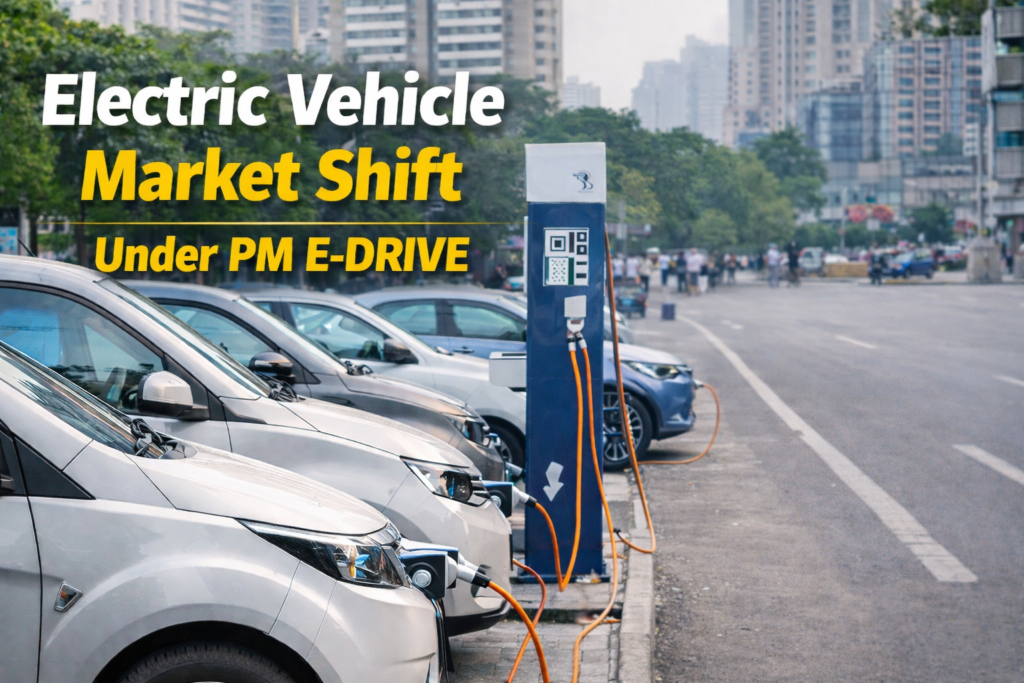
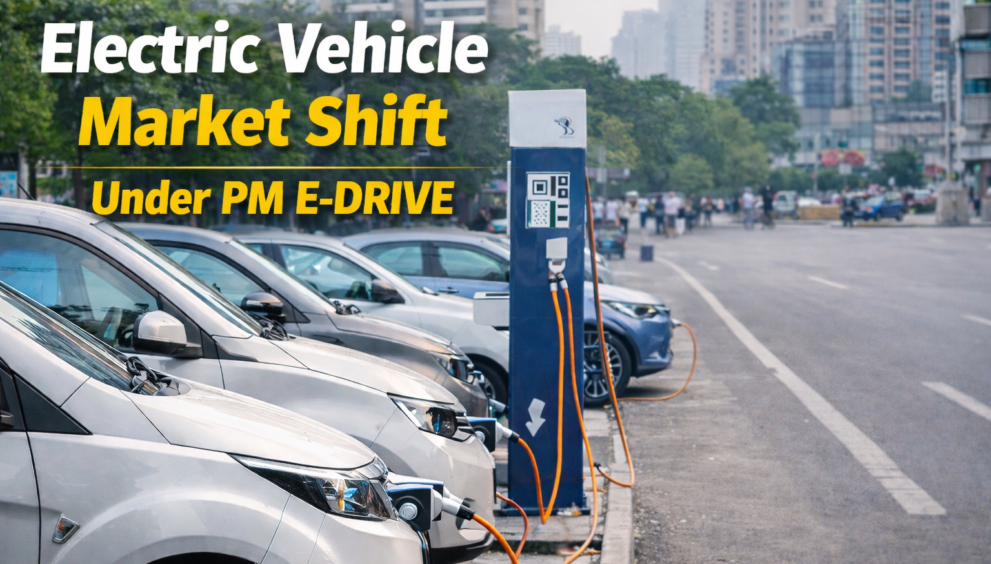
Charging infrastructure remains a decisive factor influencing Electric Vehicle adoption. PM E-DRIVE has accelerated infrastructure deployment through coordinated public-private participation. Improved charging availability directly enhances consumer confidence, addressing range concerns and enabling practical daily use. As charging networks become denser and more reliable, Electric Vehicle ownership increasingly aligns with mainstream mobility expectations.
Changing Consumer Economics of Electric Vehicles
Electric Vehicle buyers are increasingly guided by total cost of ownership rather than upfront purchase price alone. Lower running costs, reduced maintenance requirements, and improving resale values are reshaping consumer perceptions. The EV ecosystem strengthened by PM E-DRIVE supports this shift by ensuring consistent service availability, spare part access, and long-term product reliability.
Macroeconomic and Environmental Dimensions
The growth of Electric Vehicles under PM E-DRIVE aligns with broader economic objectives, including reduced fossil fuel dependence and enhanced domestic manufacturing. Expanded EV adoption contributes to lower emissions, improved urban air quality, and energy security. From an industrial perspective, ecosystem development strengthens India’s positioning within global Electric Vehicle supply chains.
Risks and Execution Challenges
Despite positive momentum, challenges persist. Charging infrastructure deployment must keep pace with rising Electric Vehicle volumes, and affordability remains critical for mass adoption. Policy coordination between central and state authorities continues to play a decisive role in ensuring uniform EV ecosystem development. Addressing these execution risks will be essential to sustain growth under PM E-DRIVE.
Strategic Outlook for the Electric Vehicle Sector
PM E-DRIVE marks a shift from incentive-led expansion to ecosystem-driven sustainability. This recalibration enhances market discipline, attracts long-term private investment, and reduces fiscal exposure. As Electric Vehicle adoption continues to rise, the policy framework positions the sector for durable growth rooted in infrastructure strength, manufacturing scale, and consumer confidence rather than subsidy dependence.
Conclusion
Electric Vehicle adoption in India is demonstrating resilience as PM E-DRIVE strengthens the EV ecosystem and supports market-driven growth. Reduced subsidies have not hindered momentum, highlighting the effectiveness of infrastructure development and industrial capacity building. This transition reflects a more mature Electric Vehicle market, capable of sustaining adoption through structural strength rather than temporary incentives, signaling a critical phase in India’s clean mobility evolution.