English























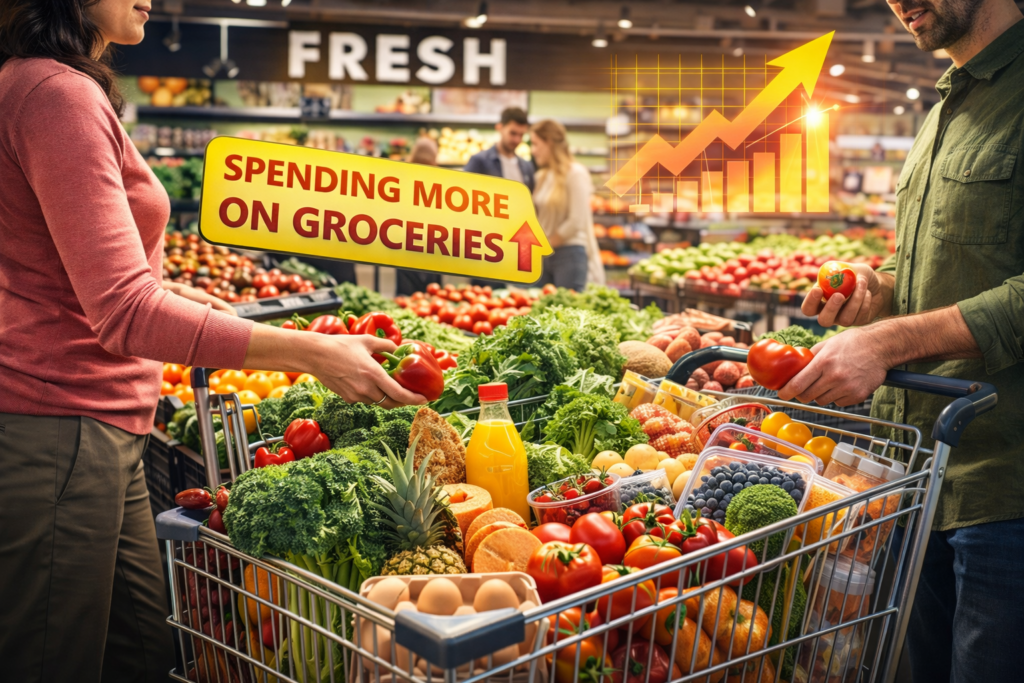

















Groceries Spending Set to Rise as Consumer Habits Shift

Groceries are poised to take up a larger share of household budgets as consumers signal plans to spend more on groceries next year. According to new industry research, shopping behavior at the fresh grocery store level is shifting, driven by inflation sensitivity, health priorities, and changing dining habits. These trends suggest that grocery spending patterns in 2026 will differ markedly from previous years, forcing retailers and suppliers to rethink pricing, promotions, and in-store experiences to meet evolving consumer expectations.
Groceries Spending Trends Point to Higher Consumer Outlays
Groceries have become a central focus of consumer spending strategies as economic uncertainty, lifestyle changes, and food inflation continue to influence purchasing decisions. Recent industry analysis indicates that many households expect grocery costs to rise further in the coming year, even as shoppers become more selective about where and how they spend. This combination of higher anticipated spending and increased scrutiny is reshaping the competitive landscape for grocery retailers.
For fresh grocery store operators, these shifts create both opportunity and pressure. While increased spending suggests stable demand, it also raises expectations around value, quality, and transparency. Consumers are no longer focused solely on price; instead, they are weighing freshness, convenience, and perceived health benefits more carefully than before.
Why Consumers Expect to Spend More on Groceries Next Year
The expectation to spend more on groceries next year is influenced by several overlapping factors. Persistent food price inflation remains a major driver, even as its pace moderates in some markets. At the same time, consumers continue to prioritize meals prepared at home, reflecting lingering changes from recent years in work patterns and dining habits.
Health and wellness considerations are also shaping grocery spending. Shoppers increasingly favor fresh produce, minimally processed foods, and premium private-label offerings. These categories often carry higher price points, contributing to overall spending growth even when unit volumes remain stable.
Fresh Grocery Store Formats Gain Strategic Importance
Fresh grocery store formats are emerging as critical battlegrounds in the competition for consumer loyalty. As spending rises, shoppers expect higher standards for freshness, assortment, and in-store experience. Retailers investing in upgraded produce sections, expanded prepared foods, and localized assortments are better positioned to capture a larger share of wallet.
These stores also serve as trust anchors. In an environment where consumers are paying closer attention to what they buy, visible quality cues such as freshness, sourcing information, and cleanliness influence purchasing decisions. Grocery retailers that fail to meet these expectations risk losing customers despite broader spending growth.
Value Perception Shapes Grocery Spending Decisions
Although grocery spending is projected to rise, value perception remains paramount. Consumers are increasingly strategic, trading down in some categories while splurging selectively in others. This behavior reflects a more nuanced approach to household budgeting rather than indiscriminate spending increases.
Promotions, loyalty programs, and private-label expansion play a significant role in shaping this value equation. Fresh grocery store operators that effectively balance competitive pricing with quality differentiation are more likely to retain price-conscious shoppers who nonetheless expect premium experiences in key categories.
The Role of Inflation and Economic Sentiment
Economic sentiment continues to influence grocery spending outlooks. Even when inflation stabilizes, consumer confidence often lags, encouraging cautious behavior. As a result, grocery spending increases are not necessarily a sign of optimism but rather an adjustment to higher baseline costs.
This environment places pressure on retailers to communicate value clearly. Transparent pricing, consistent promotions, and predictable quality help reassure shoppers who feel constrained but still anticipate spending more on essential categories like groceries.
Changing Channel Preferences in Grocery Shopping
Another notable trend shaping grocery spending is the evolution of channel preferences. While online grocery adoption has plateaued in some regions, hybrid shopping models remain popular. Consumers frequently combine online ordering for staples with in-store visits to fresh grocery stores for produce, meat, and bakery items.
This blended behavior underscores the importance of omnichannel execution. Retailers that align pricing, promotions, and inventory across channels are better equipped to capture incremental spending as consumers adjust shopping routines.
Commercial Implications for Grocery Retailers
From a commercial investigation perspective, rising grocery spending presents complex implications. Higher consumer outlays do not automatically translate into higher profitability. Increased labor costs, supply-chain volatility, and investments in technology continue to weigh on margins.
Retailers must therefore focus on efficiency as well as growth. Data-driven assortment planning, demand forecasting, and targeted promotions are increasingly essential tools. Those that leverage analytics to understand shifting consumer priorities can better align offerings with spending patterns.
Supplier and Brand Strategies Adapt to Spending Shifts
Brands and suppliers are also adjusting strategies in response to grocery spending trends. Product innovation increasingly emphasizes value-added attributes such as health benefits, sustainability claims, and convenience. These features resonate with consumers willing to pay more for perceived quality and relevance.
At the same time, brands face pressure to justify price increases. Clear communication around product differentiation and benefits becomes critical as consumers scrutinize grocery bills more closely.
Private Labels and Competitive Dynamics
Private labels are gaining prominence as consumers seek ways to manage higher grocery spending without sacrificing quality. Many fresh grocery store operators have invested heavily in private-label development, positioning these products as credible alternatives to national brands.
This shift intensifies competition and alters negotiating dynamics between retailers and suppliers. As private labels capture a larger share of spending, retailers gain greater control over pricing and margins, reinforcing their strategic leverage.
Long-Term Outlook for Grocery Spending
Looking ahead, grocery spending is likely to remain elevated relative to historical norms. Structural changes in consumption habits, including more frequent home cooking and increased attention to food quality, suggest that groceries will continue to command a significant share of consumer budgets.
However, growth will not be uniform. Retailers that fail to adapt to changing expectations around freshness, value, and convenience may struggle even as overall spending rises. The market will increasingly reward those capable of aligning operational execution with evolving consumer priorities.
Conclusion
Groceries are set to play an even more prominent role in household spending as consumers plan to spend more on groceries next year. Shifts toward fresh grocery store formats, selective premiumization, and heightened value awareness are reshaping the competitive landscape. For retailers and suppliers alike, success will depend on understanding not just how much consumers spend, but why and where they choose to do so. In a higher-spending yet more discerning environment, strategic clarity and execution will define winners in the grocery sector.