English




















































Luxury Jewelry Market Trends Driving Growth in 2026

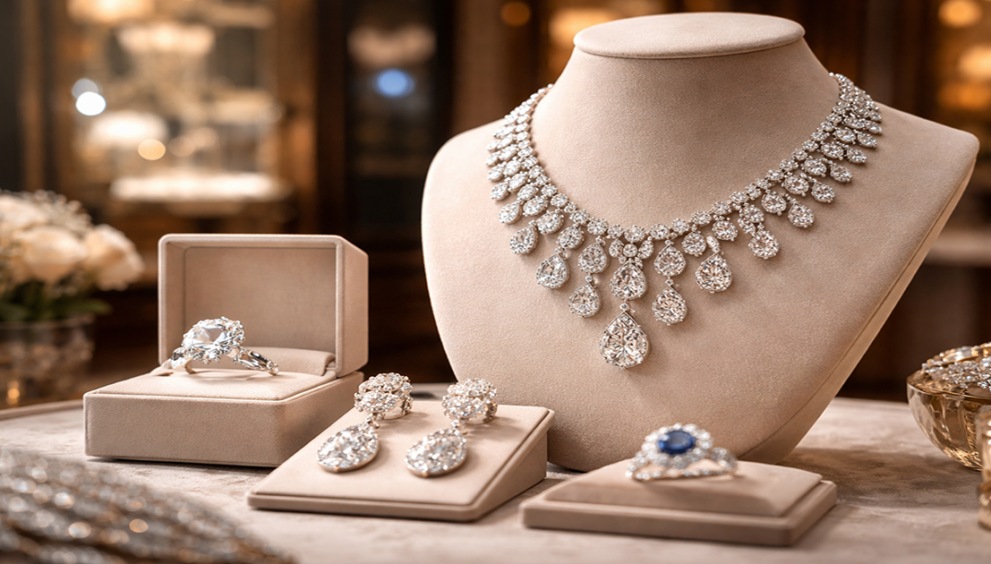
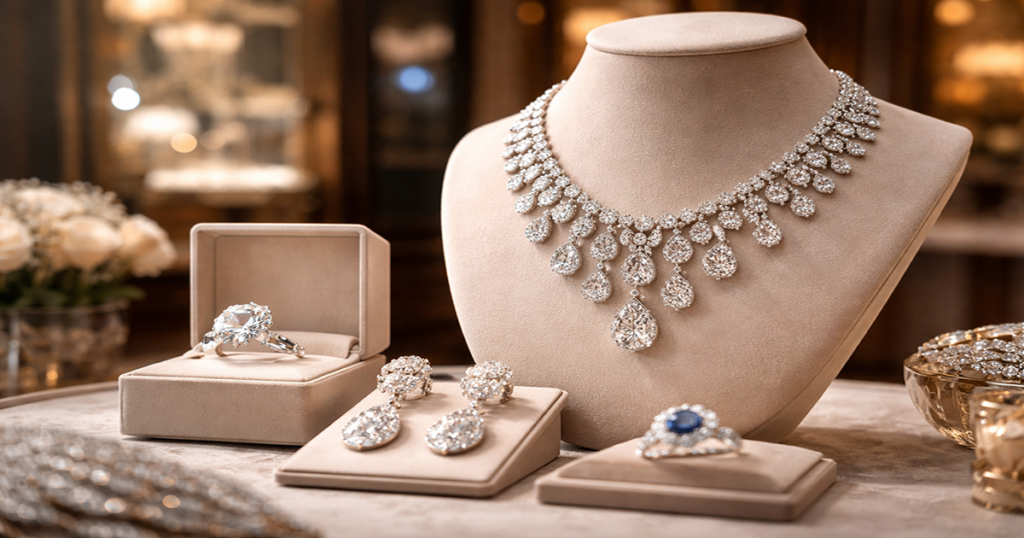
Luxury jewelry continues to redefine resilience in a global market shaped by uneven demand. While several luxury categories experience volatility, high-end jewelry demand trends remain stable. In contrast to fashion and accessories, jewelry benefits from its dual role as both an emotional purchase and a financial asset. As a result, affluent consumers increasingly prioritize pieces that offer long-term value. Moreover, shifting consumer behavior reflects a broader move toward investment-driven luxury consumption. Consequently, luxury jewelry stands out as a critical growth segment despite ongoing market uncertainty.
Luxury Jewelry as a Stable Growth Segment
Luxury jewelry maintains a strong position within the global luxury market. While other segments fluctuate, this category continues to demonstrate consistent performance. In particular, high-end jewelry demand trends highlight a preference for durable and valuable assets. As economic uncertainty persists, affluent buyers shift spending toward items with intrinsic worth. Additionally, craftsmanship and rarity enhance the appeal of fine jewelry. These factors contribute to long-term value retention and cultural significance. Therefore, high-end jewelry growth despite luxury market slowdown remains a defining trend. Overall, this resilience strengthens the role of luxury jewelry in global market stability.
Luxury Jewelry Market Trends Shaping 2026
Luxury jewelry market trends reveal significant changes in consumer expectations. Increasingly, buyers focus on sustainability, personalization, and transparency. For instance, ethical sourcing and traceable supply chains influence purchasing decisions across premium segments. At the same time, brands adapt to these expectations by refining their production and sourcing strategies. Furthermore, digital transformation continues to reshape the industry. Advanced technologies now enhance customer engagement through personalized experiences. As a result, virtual consultations and AI-driven tools improve both accessibility and exclusivity. Consequently, these innovations support long-term growth across the luxury jewelry sector.
High Jewelry Market Growth and Investment Value
High jewelry market growth reflects rising interest in tangible assets. Unlike other luxury goods, fine jewelry often retains or increases its value over time. Therefore, investors and collectors actively seek rare gemstones and limited-edition pieces. In addition, auction markets demonstrate strong demand for high-value items. Moreover, global wealth expansion supports continued investment in luxury jewelry. High-net-worth individuals increasingly view jewelry as part of diversified portfolios. Consequently, luxury jewelry demand among high-net-worth consumers remains strong across regions. This trend reinforces the sector’s role as both a luxury product and an investment vehicle.
Luxury Jewelry Demand Among High-Net-Worth Consumers
Luxury jewelry demand among high-net-worth consumers remains a primary driver of market expansion. This segment exhibits consistent purchasing behavior, largely unaffected by short-term economic fluctuations. Spending decisions focus on exclusivity, craftsmanship, and legacy value. Limited collections and bespoke designs appeal strongly to this demographic. Buyers seek uniqueness and personalization, which enhance both emotional and financial value. This demand pattern ensures continuous growth across premium categories and supports long-term market stability.
High-End Jewelry Demand Trends in a Changing Economy
High-end jewelry demand trends indicate a shift toward selective purchasing behavior. Rather than prioritizing quantity, consumers now focus on quality and long-term value. As a result, timeless designs and superior craftsmanship gain importance. This shift aligns with broader economic conditions that encourage thoughtful spending. In addition, consumers increasingly value authenticity and exclusivity. Mass-produced luxury items no longer dominate purchasing decisions. Instead, bespoke and heritage-driven designs attract greater interest. Consequently, luxury jewelry continues to maintain strong demand even in changing economic environments.
Impact of Global Economic Conditions on Luxury Jewelry
Global economic factors continue to influence luxury consumption patterns. Inflation, currency fluctuations, and geopolitical developments affect purchasing behavior across sectors. However, luxury jewelry demonstrates resilience due to its perceived stability and investment potential. Affluent consumers often increase spending on assets during periods of uncertainty. Jewelry benefits from this behavior, as it offers both aesthetic value and financial security. This dynamic reinforces the segment’s position as a reliable component of the luxury market.
Digital Evolution and Market Expansion
Digital innovation is transforming the luxury jewelry industry. Online platforms provide access to global audiences while preserving brand exclusivity. Advanced visualization tools and virtual experiences enhance customer engagement and support informed purchasing decisions. Data-driven strategies enable brands to understand consumer preferences and optimize offerings. This approach improves conversion rates and strengthens customer relationships. As digital adoption increases, luxury jewelry market trends continue to evolve in alignment with technological advancements.
Sustainability and Ethical Sourcing in Luxury Jewelry
Sustainability has become a defining factor in the luxury jewelry sector. Consumers demand transparency in sourcing and production processes. Ethical practices influence brand perception and purchasing decisions, particularly among younger affluent buyers. Recycled materials, conflict-free diamonds, and responsible mining practices are gaining prominence. Brands that prioritize sustainability strengthen their market position and attract environmentally conscious consumers. This trend contributes to long-term growth and aligns with global sustainability goals.
Strategic Opportunities in the Luxury Jewelry Market
The evolving market landscape presents significant opportunities for brands and investors. Expansion into emerging markets offers access to growing affluent populations. Regions such as Asia-Pacific and the Middle East continue to drive demand growth. Collaborations, limited editions, and storytelling strategies enhance brand differentiation. These approaches increase desirability and strengthen customer loyalty. Strategic investments in digital infrastructure and sustainability further support competitive advantage.
Luxury Jewelry as a Future-Proof Asset
Luxury jewelry increasingly serves as a future-proof asset within the global economy. Its ability to retain value, combined with emotional significance, makes it a unique investment category. High jewelry market growth reflects sustained interest from both consumers and investors. As wealth distribution evolves, demand for premium assets is expected to rise. Jewelry’s dual role as an adornment and an investment ensures continued relevance. This characteristic positions luxury jewelry as a cornerstone of long-term wealth strategies.
Conclusion: Sustained Growth Amid Market Shifts
Luxury jewelry continues to outperform expectations in a complex economic environment. Market trends highlight resilience driven by high-net-worth consumers and evolving purchasing behaviors. The emphasis on value, sustainability, and exclusivity reinforces demand across global markets. Luxury jewelry market trends indicate sustained growth supported by investment appeal and digital transformation. High-end jewelry demand trends remain strong despite broader luxury market fluctuations. As the industry adapts to changing conditions, luxury jewelry is positioned to maintain its status as one of the most stable and valuable segments in the global luxury economy.