English













































































Porsche and Audi Join Forces: A Strategic Shift Shaking the Auto Industry in 2026

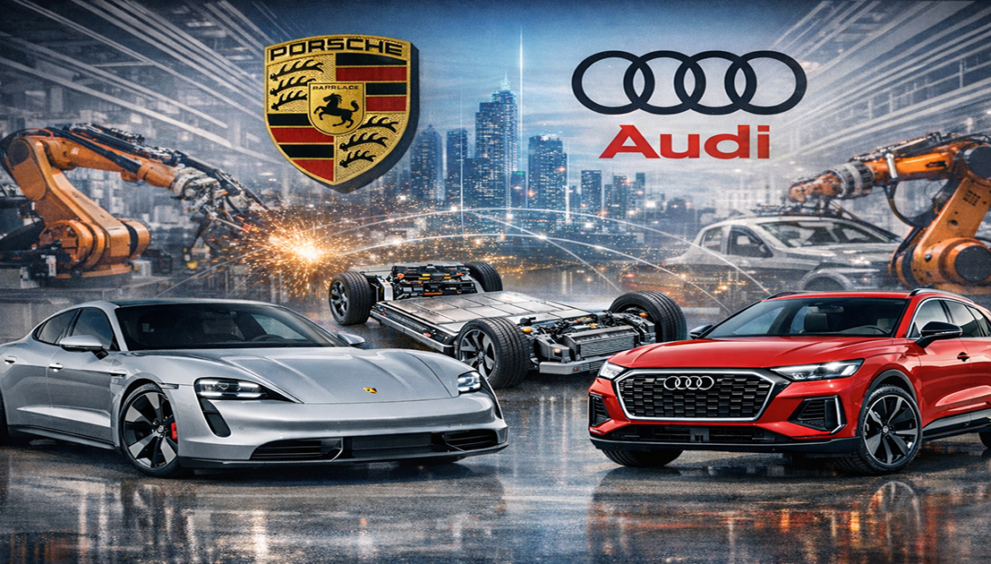
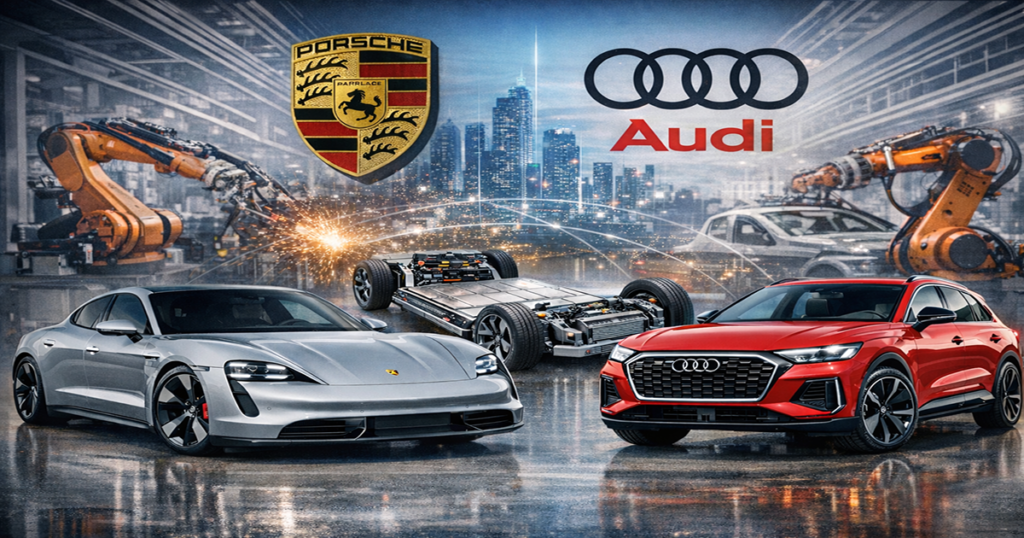
The evolving dynamics of the global automotive industry have intensified pressure on premium manufacturers to recalibrate electric vehicle strategies. The strengthening relationship between Porsche and Audi signals a decisive shift toward operational efficiency, platform consolidation, and cost optimization. As EV adoption faces temporary deceleration in key markets, the Porsche Audi strategic alliance emerges as a calculated response within the broader framework of Volkswagen Group luxury brands cooperation.
Porsche Audi Alliance: Strategic Realignment in a Changing EV Landscape
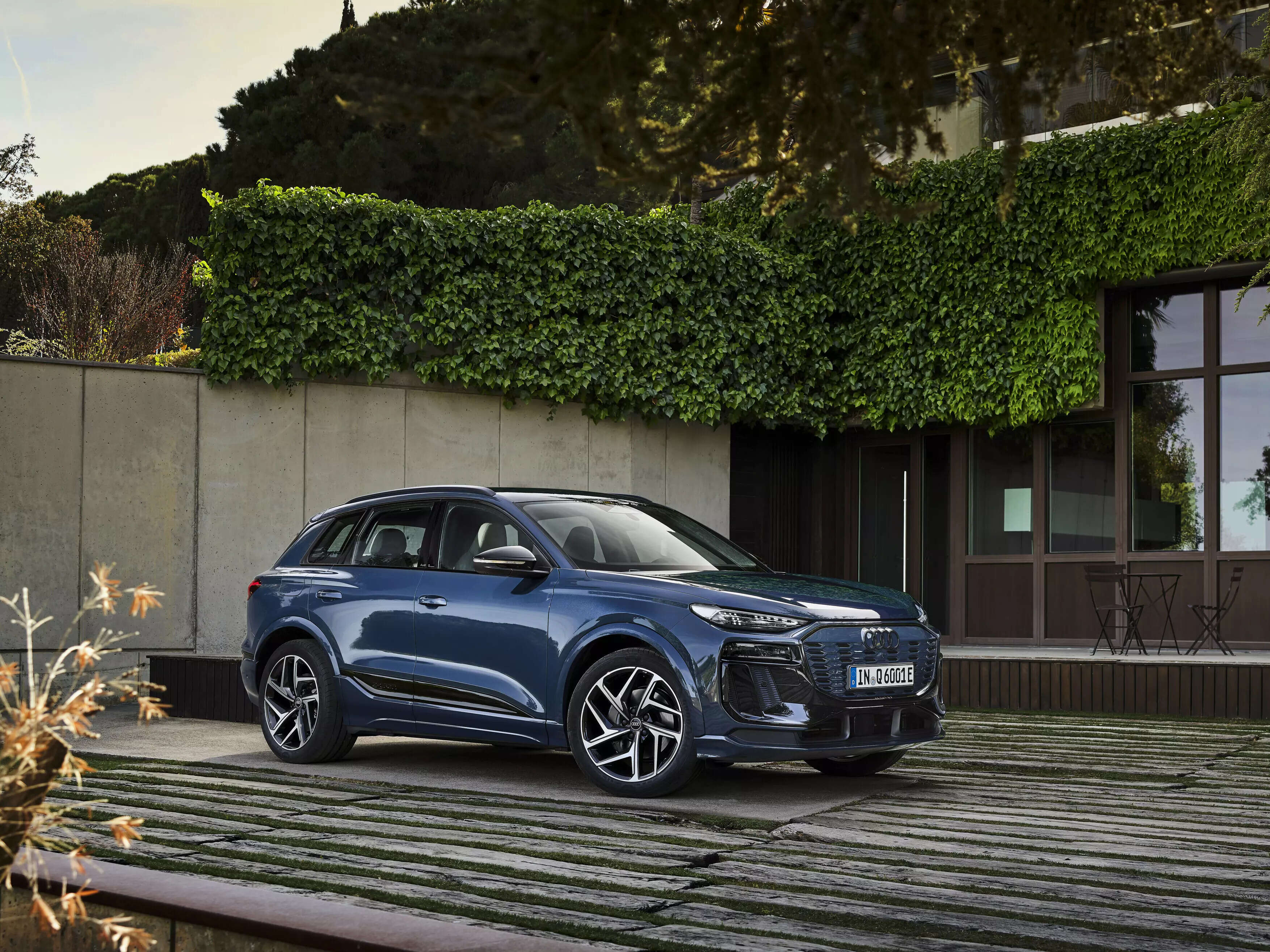
The Porsche Audi alliance represents more than a conventional collaboration; it reflects a structural transformation in how premium automotive brands approach electrification. As macroeconomic conditions, infrastructure limitations, and consumer adoption rates influence EV demand, manufacturers are prioritizing scalable efficiencies over aggressive expansion. The partnership aligns engineering resources, production capabilities, and technological investments to mitigate risks associated with fluctuating EV demand. This recalibration is particularly relevant in the context of Audi Porsche EV strategy challenges, where high development costs and uncertain returns necessitate tighter integration.
Industry Context: EV Slowdown and Strategic Consolidation
The global EV market, once characterized by exponential growth projections, has entered a phase of moderated expansion. Factors such as charging infrastructure gaps, high battery costs, and regional policy shifts have contributed to a more cautious outlook. Within this environment, Porsche and Audi are collaborating after EV slowdown to optimize resource allocation. The decision reflects a broader industry trend where automakers prioritize profitability and scalability over rapid electrification timelines. The Volkswagen Group luxury brands cooperation model provides a structural advantage, enabling shared investments in research and development while maintaining brand differentiation. This approach ensures that both Porsche and Audi retain distinct market identities while benefiting from shared technological ecosystems.
Porsche Audi Strategic Alliance: Core Objectives
The Porsche Audi strategic alliance is driven by three primary objectives: cost reduction, technological synergy, and accelerated innovation. These objectives are interconnected and essential for sustaining competitiveness in the premium EV segment. Cost reduction remains a central focus, particularly in battery development and platform engineering. By pooling resources, both brands can achieve economies of scale that would be unattainable independently. Technological synergy involves integrating software architectures, powertrain technologies, and manufacturing processes. This integration enhances efficiency while reducing duplication of efforts. Accelerated innovation ensures that both brands remain at the forefront of EV advancements despite market uncertainties. Shared development frameworks enable faster deployment of new technologies across multiple models.
Shared Platform Development and Future Models
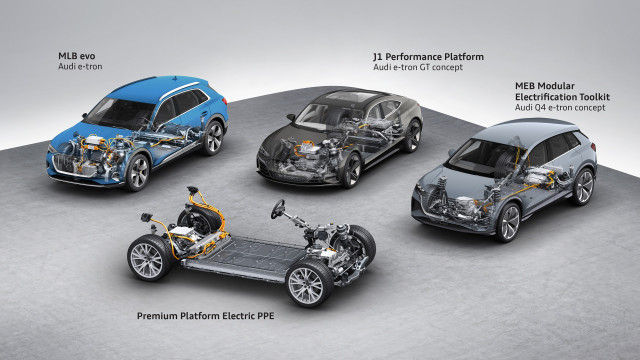
A critical component of the alliance is Porsche Audi shared platform development and future models. The Premium Platform Electric (PPE) architecture serves as a cornerstone for this collaboration, enabling both brands to build diverse vehicle portfolios on a unified foundation. This platform strategy allows for flexibility in design and performance characteristics while maintaining cost efficiency. Porsche can focus on high-performance applications, while Audi emphasizes luxury and technological sophistication. The shared platform approach also facilitates rapid scaling of production, reducing time-to-market for new models. This capability is essential in a competitive landscape where technological advancements occur at an accelerated pace.
Engineering Synergies and Manufacturing Efficiency
The integration of engineering teams across Porsche and Audi enhances knowledge transfer and innovation. Collaborative development processes enable both brands to leverage specialized expertise, resulting in more refined and efficient solutions. Manufacturing efficiency is another critical area of focus. Shared production facilities and standardized processes reduce operational costs and improve scalability. This approach aligns with the broader objective of Porsche and Audi forge closer ties to cut costs. Advanced automation and digital manufacturing techniques further enhance efficiency. The adoption of smart factory technologies enables real-time monitoring and optimization of production processes, ensuring consistent quality and reduced waste.
Software Integration and Digital Ecosystems
The transition to software-defined vehicles represents a significant shift in the automotive industry. Porsche and Audi are leveraging their alliance to develop unified software architectures that support advanced driver assistance systems, connectivity, and autonomous capabilities. Software integration reduces complexity and enhances compatibility across models. This approach also facilitates over-the-air updates, enabling continuous improvement of vehicle performance and features. The collaboration extends to digital ecosystems, including infotainment systems and user interfaces. By standardizing these elements, both brands can deliver consistent and seamless user experiences.
Financial Implications and Cost Optimization
The financial rationale behind the Porsche Audi collaboration is rooted in cost optimization and risk mitigation. The high capital expenditure associated with EV development necessitates collaborative strategies to ensure sustainable profitability. Shared investments in battery technology, research and development, and infrastructure reduce financial burdens on individual brands. This approach enhances return on investment and supports long-term growth objectives. The alliance also enables more efficient supply chain management. By consolidating procurement processes, Porsche and Audi can negotiate better terms with suppliers and ensure stable access to critical components.
Competitive Positioning in the Premium Segment
The Porsche Audi strategic alliance strengthens the competitive positioning of both brands within the premium automotive segment. By leveraging shared resources, they can compete more effectively with other luxury automakers that are also investing heavily in electrification. Brand differentiation remains a key priority. Porsche continues to emphasize performance and driving dynamics, while Audi focuses on luxury, technology, and design. The shared platform approach supports this differentiation by providing a flexible foundation for diverse product offerings. The collaboration also enhances global market reach. By aligning strategies, Porsche and Audi can better address regional market demands and regulatory requirements.
Challenges and Strategic Risks
Despite its advantages, the Porsche Audi alliance faces several challenges. Balancing brand identity with shared development processes requires careful management. Excessive standardization could dilute the unique characteristics that define each brand. Audi Porsche EV strategy challenges also include managing technological complexity and ensuring seamless integration across platforms. The rapid pace of innovation in the EV sector necessitates continuous adaptation and investment. Market uncertainties present another risk. Fluctuations in demand, regulatory changes, and competitive pressures could impact the effectiveness of the alliance.
Future Outlook: Long-Term Strategic Impact
The long-term impact of the Porsche Audi collaboration is likely to extend beyond immediate cost savings and operational efficiencies. The alliance sets a precedent for how premium automotive brands can navigate the transition to electrification. The integration of engineering, manufacturing, and software development processes creates a robust framework for innovation. This framework positions Porsche and Audi to capitalize on emerging opportunities in the EV market. The collaboration also reinforces the strategic importance of Volkswagen Group luxury brands cooperation. By leveraging collective strengths, the group can maintain its leadership position in the global automotive industry.
Conclusion: A Calculated Strategic Evolution
The Porsche Audi alliance represents a calculated response to the evolving challenges of the automotive industry. By prioritizing efficiency, collaboration, and innovation, both brands are positioning themselves for sustained success in a competitive and uncertain environment. The alignment of resources and strategies underscores the importance of adaptability in the face of market shifts. As the EV landscape continues to evolve, the Porsche Audi strategic alliance serves as a model for how premium manufacturers can achieve resilience and growth through collaboration. The ongoing partnership reflects a broader transformation within the industry, where cooperation and integration are becoming essential for navigating the complexities of electrification and technological advancement.