English





































Real Estate Enters a New Era With World Property Exchange

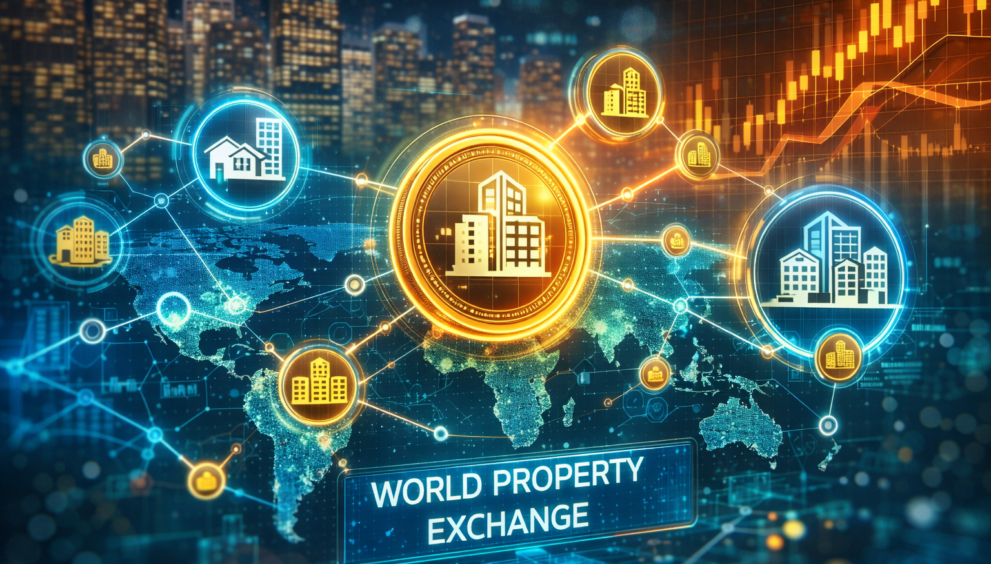
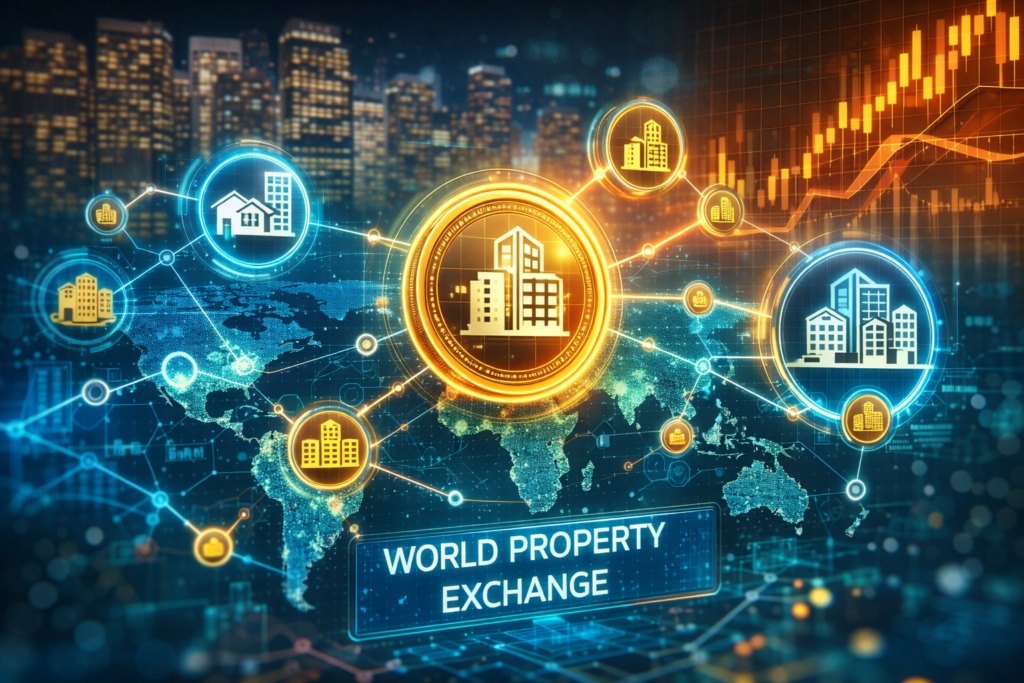
Real estate is undergoing a structural transformation as the World Property Exchange introduces a platform designed to make property assets tradeable and democratized on a global scale. By combining real estate markets with digital asset infrastructure, the initiative aims to unlock liquidity, broaden investor access, and modernize how property transactions occur. The emergence of tokenized real estate signals a shift away from traditional barriers, positioning real estate as a more accessible and transparent asset class for institutional and individual participants alike.
Real Estate and the Rise of the World Property Exchange
Real estate has historically been defined by illiquidity, high capital requirements, and geographic constraints. The introduction of the World Property Exchange represents an effort to re-engineer these fundamentals by applying token-based financial infrastructure to property ownership and transactions. This model positions real estate alongside other digitized asset classes, enabling fractional ownership and continuous market participation.
The initiative reflects broader financial market trends where assets are increasingly structured for liquidity, transparency, and global accessibility. By linking real estate with digital exchange mechanisms, the World Property Exchange aims to address longstanding inefficiencies that have limited participation in property markets.
How the World Property Exchange Works
The World Property Exchange is structured to operate as a global marketplace where real estate assets can be represented digitally and traded efficiently. Properties are converted into standardized digital units, allowing transactions to occur without the traditional friction associated with cross-border real estate deals.
This approach introduces a framework where ownership interests can be exchanged more rapidly while maintaining regulatory alignment. By integrating banking, exchange, and token infrastructure, the platform seeks to support secure settlement and pricing transparency across international real estate markets.
Making Real Estate Tradeable and Democratized
A defining feature of the World Property Exchange is its focus on making real estate tradeable and democratized. Traditional property investment has often been limited to high-net-worth individuals and institutional investors due to capital intensity and regulatory complexity. Tokenization lowers entry thresholds, enabling broader participation without requiring full asset ownership.
Democratization also extends to geographic access. Investors are no longer restricted to local markets, as tokenized structures allow exposure to international real estate portfolios. This shift has implications for portfolio diversification and risk distribution across global property sectors.
Liquidity and Market Efficiency
Liquidity has long been a challenge in real estate. Transactions can take months, with pricing opacity and high transaction costs. By introducing exchange-based trading, the World Property Exchange aims to create a more continuous pricing environment, similar to other financial markets.
Improved liquidity can enhance price discovery and reduce volatility caused by infrequent transactions. For developers and asset owners, this model may offer alternative capital-raising pathways, reducing reliance on traditional financing structures.
Regulatory and Structural Considerations
The evolution of tradeable real estate raises important regulatory considerations. The World Property Exchange framework emphasizes compliance with financial and property regulations while adapting to digital asset standards. Aligning real estate law with tokenized ownership models remains a critical factor in determining scalability.
Regulators are increasingly examining how digital assets intersect with established markets. Platforms that prioritize transparency, reporting, and investor protections are better positioned to gain acceptance within formal financial systems.
Commercial Implications for Investors
From a commercial investigation perspective, tokenized real estate presents both opportunity and risk. Enhanced liquidity and access may attract a new class of investors seeking exposure to property markets without long-term capital lock-in. However, market maturity, valuation mechanisms, and governance structures will influence adoption rates.
Institutional investors may view platforms like the World Property Exchange as complementary rather than disruptive, integrating tokenized assets into broader real estate strategies. Retail participation, meanwhile, could expand as familiarity with digital asset markets increases.
Impact on Global Property Markets
The introduction of a global real estate exchange has potential implications for market dynamics. Increased cross-border participation may influence pricing in certain regions, particularly high-demand urban markets. At the same time, secondary market trading could reduce reliance on localized intermediaries.
This evolution may also encourage standardization in property data and valuation practices. As markets become more interconnected, consistency and transparency become essential for sustaining investor confidence.
Technology as the Enabler
Technology underpins the World Property Exchange model. Distributed ledger systems enable secure recordkeeping, while smart contracts automate transaction processes. These capabilities reduce administrative overhead and minimize settlement risk.
As technology adoption accelerates, real estate markets may increasingly resemble other digitized asset classes. The challenge lies in balancing innovation with the legal and operational realities of physical property ownership.
Investor Sentiment and Market Adoption
Investor sentiment toward tokenized real estate is evolving cautiously. While interest is growing, adoption depends on demonstrated performance, regulatory clarity, and platform reliability. Early-stage participation is likely to come from technologically sophisticated investors and institutions exploring alternative asset structures.
Over time, successful execution could normalize digital real estate trading, positioning platforms like the World Property Exchange as integral components of the global property ecosystem.
Long-Term Outlook for Tradeable Real Estate
The long-term outlook for tradeable and democratized real estate depends on sustained regulatory support and technological resilience. If these conditions are met, tokenized property markets could redefine how real estate is owned, financed, and traded.
The World Property Exchange represents a step toward that future, offering a model that challenges traditional assumptions while aligning real estate with modern financial infrastructure.
Conclusion
Real estate is entering a phase of structural reinvention as platforms like the World Property Exchange seek to make property assets tradeable and democratized. By combining digital exchange mechanisms with global property markets, the initiative highlights a shift toward liquidity, accessibility, and transparency. While challenges remain, the emergence of tokenized real estate signals a meaningful evolution in how real estate functions as an asset class in a digital economy.