English

































Rob Enderle Names Tech Product of the Year 2025

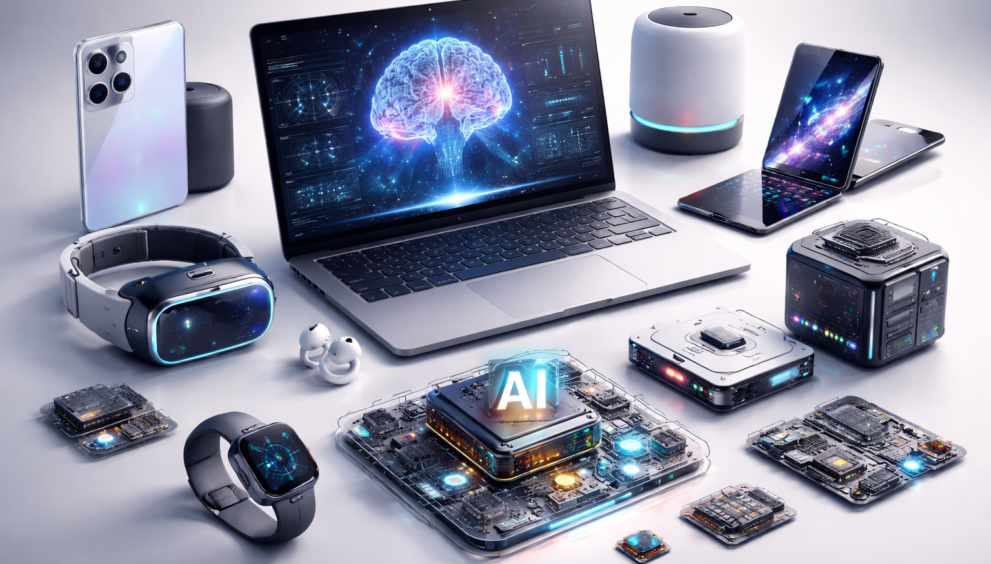
Rob Enderle has long been recognized for separating substance from spectacle in technology analysis, and his Tech Product of the Year designation for 2025 reflects that discipline. At a time when AI hype dominates industry headlines, Enderle’s evaluation places renewed focus on microcomputing fundamentals and real-world value creation. By examining performance, usability, and market readiness, Rob Enderle’s Tech Product of the Year decision challenges prevailing narratives and highlights how innovation continues to advance outside the most publicized AI cycles. The analysis offers a grounded perspective on where meaningful progress is occurring amid rapid technological change.
Rob Enderle’s Role in Technology Assessment
Rob Enderle occupies a distinct position within the technology analysis landscape. Known for an analytical approach that prioritizes practical impact over speculative promise, Enderle has consistently evaluated emerging technologies through the lens of usability, scalability, and market alignment. His annual Tech Product of the Year assessment is widely followed because it reflects measured judgment rather than trend-driven enthusiasm.
In 2025, this approach holds particular relevance. With AI hype reaching unprecedented levels, Rob Enderle’s analysis serves as a counterbalance, emphasizing that long-term technological progress is rarely driven by novelty alone.
Context: AI Hype and Market Saturation
The technology sector in 2025 is defined by intense AI hype. Generative models, automation platforms, and predictive systems dominate product launches and investment cycles. While AI innovation remains significant, the saturation of AI messaging has made differentiation increasingly difficult.
Rob Enderle’s commentary acknowledges AI’s transformative potential while questioning the sustainability of hype-driven valuation. The Tech Product of the Year analysis reflects concern that excessive focus on AI narratives risks overshadowing equally critical advances occurring in adjacent domains such as microcomputing and hardware architecture.
Microcomputing’s Quiet Resurgence
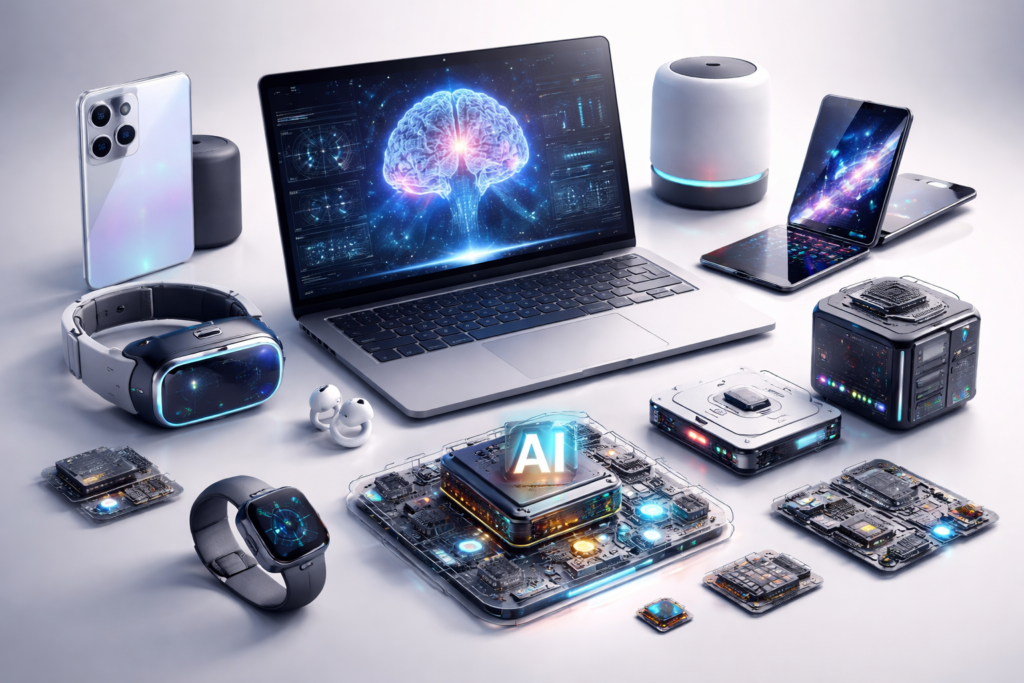
Microcomputing has re-emerged as a central theme in Rob Enderle’s 2025 analysis. Once considered a mature segment, microcomputing is experiencing renewed relevance driven by edge computing, power efficiency demands, and specialized workloads. Enderle highlights how advances in processor design, system integration, and thermal efficiency are redefining performance expectations.
This renewed focus underscores a broader industry shift. As AI workloads expand, the underlying microcomputing infrastructure becomes increasingly important. Rob Enderle’s Tech Product of the Year recognition reflects this foundational reality.
Criteria Behind the Tech Product of the Year
Rob Enderle’s selection methodology emphasizes real-world impact rather than speculative potential. Key considerations include performance consistency, user experience, deployment readiness, and ecosystem compatibility. The Tech Product of the Year designation signals that a product has crossed the threshold from innovation concept to operational value.
In an environment dominated by AI hype, this criteria-driven approach stands out. Enderle’s analysis reinforces that technological leadership is defined by execution quality as much as conceptual ambition.
Balancing AI Innovation With Practical Value
While Rob Enderle remains cautious of AI hype, the analysis does not dismiss AI’s role. Instead, it contextualizes AI within a broader technology stack. AI systems rely heavily on efficient microcomputing platforms, optimized hardware, and robust integration layers.
The Tech Product of the Year selection reflects this balance. Rather than rewarding AI branding alone, the recognition highlights products that enable AI to function effectively at scale. This perspective aligns with enterprise priorities, where reliability and cost efficiency outweigh novelty.
Commercial Implications of Enderle’s Assessment
From a commercial investigation standpoint, Rob Enderle’s Tech Product of the Year carries meaningful signaling value. Enterprises, investors, and vendors closely track these assessments as indicators of market readiness and adoption potential. The 2025 designation reinforces confidence in technologies that deliver measurable operational benefits.
By emphasizing microcomputing innovation, Enderle’s analysis may influence procurement strategies and investment allocation. Products recognized for foundational performance often experience increased enterprise interest, particularly in infrastructure-heavy deployments.
Industry Response to the Tech Product of the Year
The industry response to Rob Enderle’s 2025 assessment reflects growing fatigue with AI hype narratives. Technology leaders increasingly seek validation rooted in performance benchmarks and deployment success rather than speculative roadmaps.
Enderle’s evaluation resonates with organizations navigating AI integration challenges. By highlighting microcomputing advancements, the analysis reframes innovation discussions around sustainability, scalability, and total cost of ownership.
Microcomputing as an Enabler of AI Scalability
Rob Enderle’s focus on microcomputing underscores its role as an enabler rather than a competitor to AI. High-performance, energy-efficient computing architectures determine how effectively AI models can be deployed across devices, data centers, and edge environments.
The Tech Product of the Year recognition reflects this interdependence. Microcomputing innovation ensures that AI systems operate reliably, securely, and cost-effectively, particularly as workloads scale beyond experimental use cases.
Challenging the Narrative of AI-First Innovation
A central theme in Rob Enderle’s 2025 analysis is narrative correction. The technology sector’s fixation on AI hype risks undervaluing incremental yet critical advancements. Enderle’s assessment challenges the assumption that AI-first branding equates to market leadership.
By spotlighting microcomputing excellence, the Tech Product of the Year designation reinforces the importance of engineering discipline and architectural optimization. This perspective encourages a more balanced innovation ecosystem.
Implications for Technology Buyers
For technology buyers, Rob Enderle’s analysis offers practical guidance. The Tech Product of the Year designation signals solutions that have demonstrated readiness for production environments. Buyers navigating crowded AI marketplaces benefit from evaluations grounded in performance and reliability.
Enderle’s emphasis on microcomputing aligns with enterprise concerns around energy efficiency, lifecycle management, and integration complexity. These considerations increasingly shape purchasing decisions in 2025.
Broader Market Trends Reflected in the Selection
The 2025 Tech Product of the Year reflects broader market trends toward optimization rather than expansion. After years of rapid feature proliferation, the industry is entering a phase focused on efficiency, consolidation, and value realization.
Rob Enderle’s assessment captures this shift. By recognizing foundational technology rather than headline-driven innovation, the analysis mirrors evolving enterprise priorities.
Long-Term Significance of Enderle’s Evaluation
Rob Enderle’s Tech Product of the Year evaluations often gain significance over time. Past selections have aligned closely with technologies that achieved sustained adoption rather than fleeting attention. The 2025 designation is positioned within this historical pattern.
As AI hype cycles mature, the enduring value of microcomputing innovation becomes more apparent. Enderle’s analysis anticipates this trajectory, reinforcing the relevance of core computing advancements.
Conclusion: Rob Enderle Redefines Technology Leadership in 2025
Rob Enderle’s Tech Product of the Year for 2025 stands as a measured response to an industry dominated by AI hype. By emphasizing microcomputing excellence and practical value, the analysis reframes innovation around sustainability and execution.
The recognition highlights that true technological progress is built on reliable foundations rather than speculative narratives. In doing so, Rob Enderle’s assessment provides clarity at a time when clarity is increasingly rare, reinforcing the importance of disciplined analysis in shaping the future of technology.